
यह भी देखें


 02.10.2026 09:28 AM
Bitcoin and Ethereum have made another sharp move higher and are getting closer to a full?fledged bull trend. We still cannot pinpoint the reasons for the latest surge in digital assets. Interestingly, the two most important recent events for the crypto world were actually negative rather than positive. Central banks (notably the Federal Reserve) began tightening monetary policy, which increases demand for safe assets like bank deposits and government bonds. The Clarity Act — the bill intended to regulate digital asset investing in the US — again failed to pass through Congress. By logic, the crypto market should have fallen rather than post a breakout rally. Yet paradoxical things are happening in financial markets at the moment. The US dollar has risen for four consecutive weeks — which hasn't prevented the crypto market from also advancing. Global bond markets are undergoing broad sell-offs, releasing capital back into liquidity. Patterns that worked before are simply not relevant now because investors and traders are ignoring them.
If liquidity flows into the crypto market, Bitcoin and Ethereum will continue to rise despite Fed policy tightening, the Clarity Act failure and the stronger dollar. Financial giant Citigroup has meanwhile raised its 12-month Bitcoin target to $113,000. The bank says capital inflows into Bitcoin and Ethereum via ETF vehicles have picked up in recent weeks, and macroeconomic conditions are forcing investors to seek alternatives to traditional instruments. Citigroup expects Ethereum to rise to $3,000. The firm also noted that despite the Clarity Act vote failing, the US Securities and Exchange Commission has issued a number of regulatory decisions on the crypto market — which, in a sense, substitute for the much-lamented bill and have improved investor sentiment.
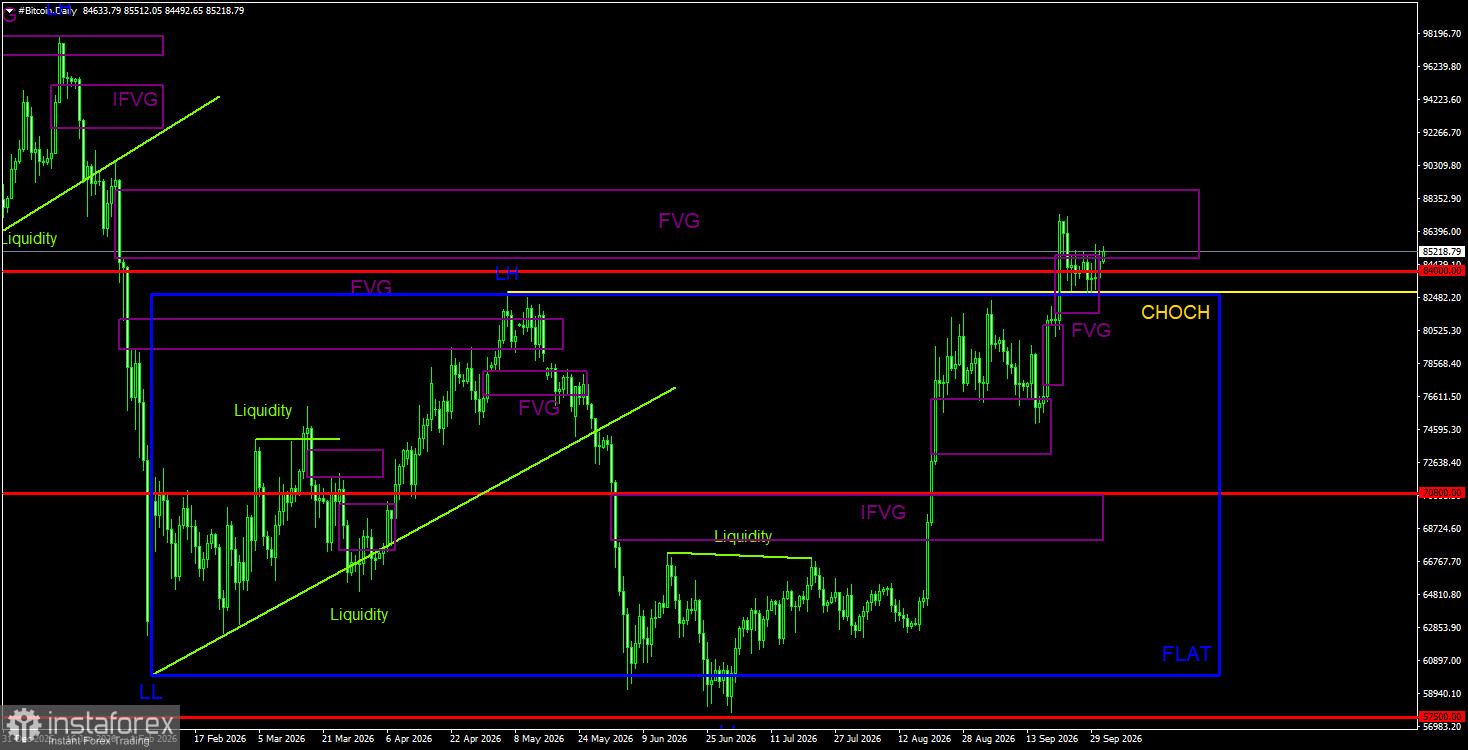
Bitcoin shows all the signs of the start of a new bull trend. This trend begins, as usual, with a pump that has no clear, concrete reasons. The Fed has not started cutting rates, and the Clarity Act has not been passed. In the near term on the daily timeframe, Bitcoin may be in decline, as price has reacted to a bearish FVG. Traders should note that the current breakout beyond the daily consolidation channel may be a deviation — yes, a deep deviation, but still a deviation. If so, Bitcoin could still fall back to $57,500. On the 4-hour timeframe, both long and short positions can be considered locally, but the most relevant pattern right now is bearish.
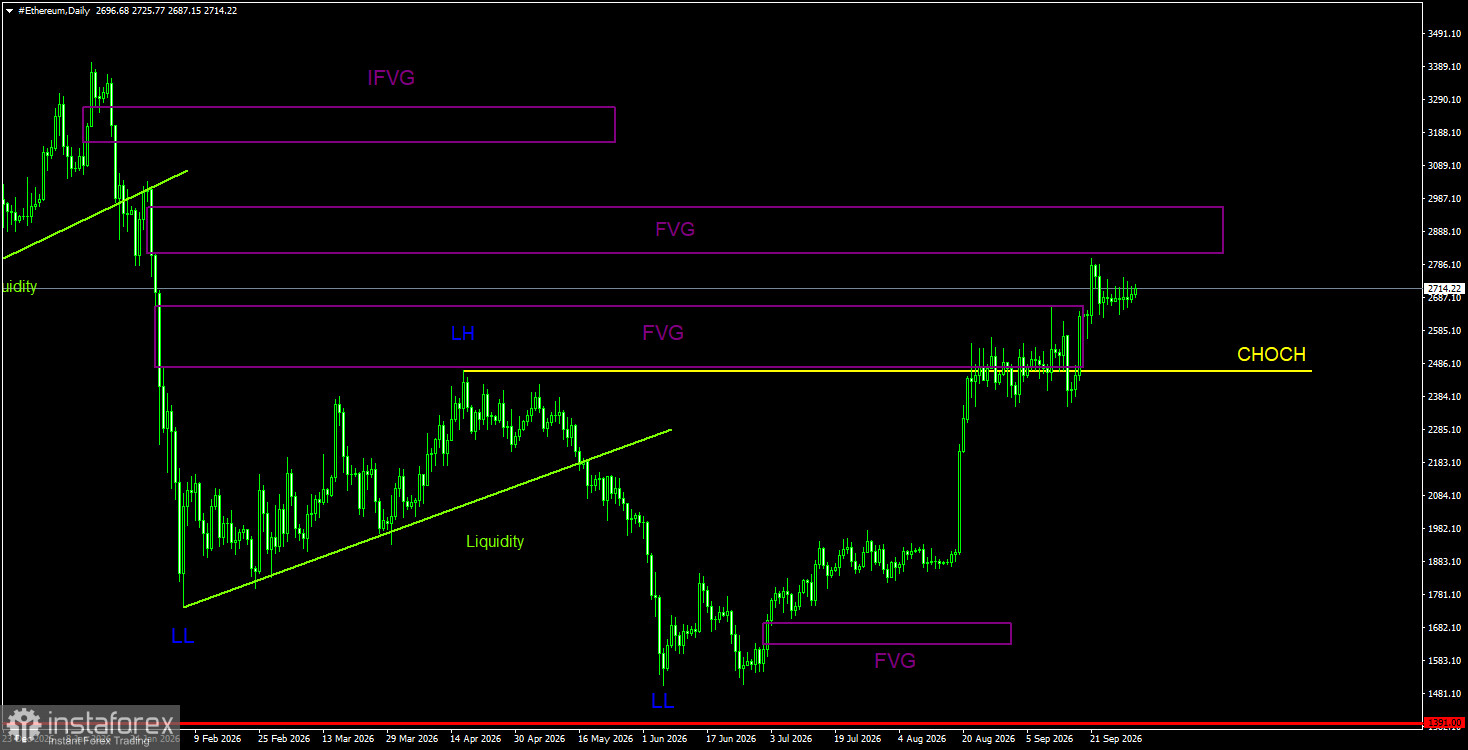
On the daily timeframe, the technical picture for Ethereum changed completely in just a few days. Ethereum is now looking toward a new uptrend. However, traders should rely on the weekly chart, where Ethereum is headed toward $4,800 — the upper band of a five-year sideways channel. On the daily chart, the first bearish FVG did not produce a significant price reaction; the next FVG may. Bitcoin filled the nearest bearish FVG on the daily timeframe, so both cryptocurrencies may enter a correction in the near term. Recent gains in digital assets have been driven purely by a pump. There are currently more fundamental reasons for a fall in both cryptocurrencies than for further growth — but liquidity flows can flood into the crypto market without clear reasons.
Comments on the charts
CHOCH is a change of character / break of the trend structure. Liquidity means traders' Stop?Losses that market makers use to build their positions. FVG stands for a Fair Value Gap (area of price inefficiency). The price often moves quickly through such areas, indicating the absence of one side in the market. Later, the price tends to return and react to these zones. IFVG is an Inverted Fair Value Gap. After a return to such a zone, the price does not react but impulsively breaks through and then tests it from the other side. OB means an Order Block. A candle on which a market maker opened a position in order to harvest liquidity and then form their own position in the opposite direction.

