
यह भी देखें


 02.10.2026 05:56 PM
The euro is currently under pressure from two directions. The energy shock is redistributing euro-area income in favor of oil and gas exporters, while France's budget crisis is testing the resilience of the monetary union. The ECB can mitigate only one of these two pressures.
Terms of Trade Dynamics
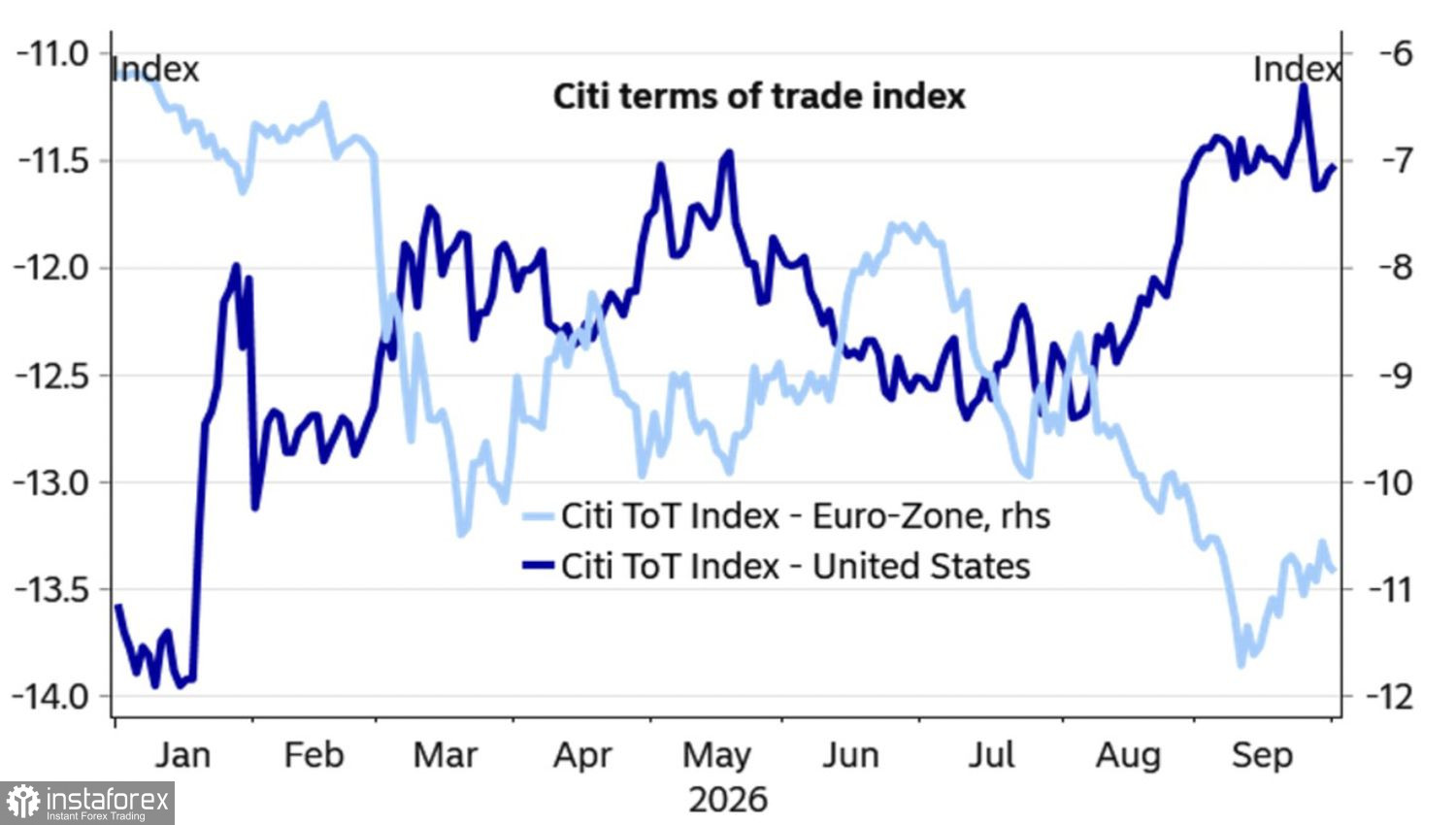
The asymmetry of the shock is clearly visible in the terms of trade. Citi's terms-of-trade index for the euro area has been falling since January, while the index for the United States, a net energy exporter, has been rising. EUR/USD is being pressured by the fact that the bloc remains a net importer of oil and gas.
For the euro, the energy shock is unfolding in two phases. Initially, higher prices push up inflation and expectations of higher deposit rates, supporting the currency. The second phase is less favorable. Persistently high prices undermine real incomes and demand and will eventually reduce inflationary pressure. The market expects three more ECB moves by September 2027, while more cautious estimates allow for only two.
EUR/USD and Bond Yield Differential Dynamics
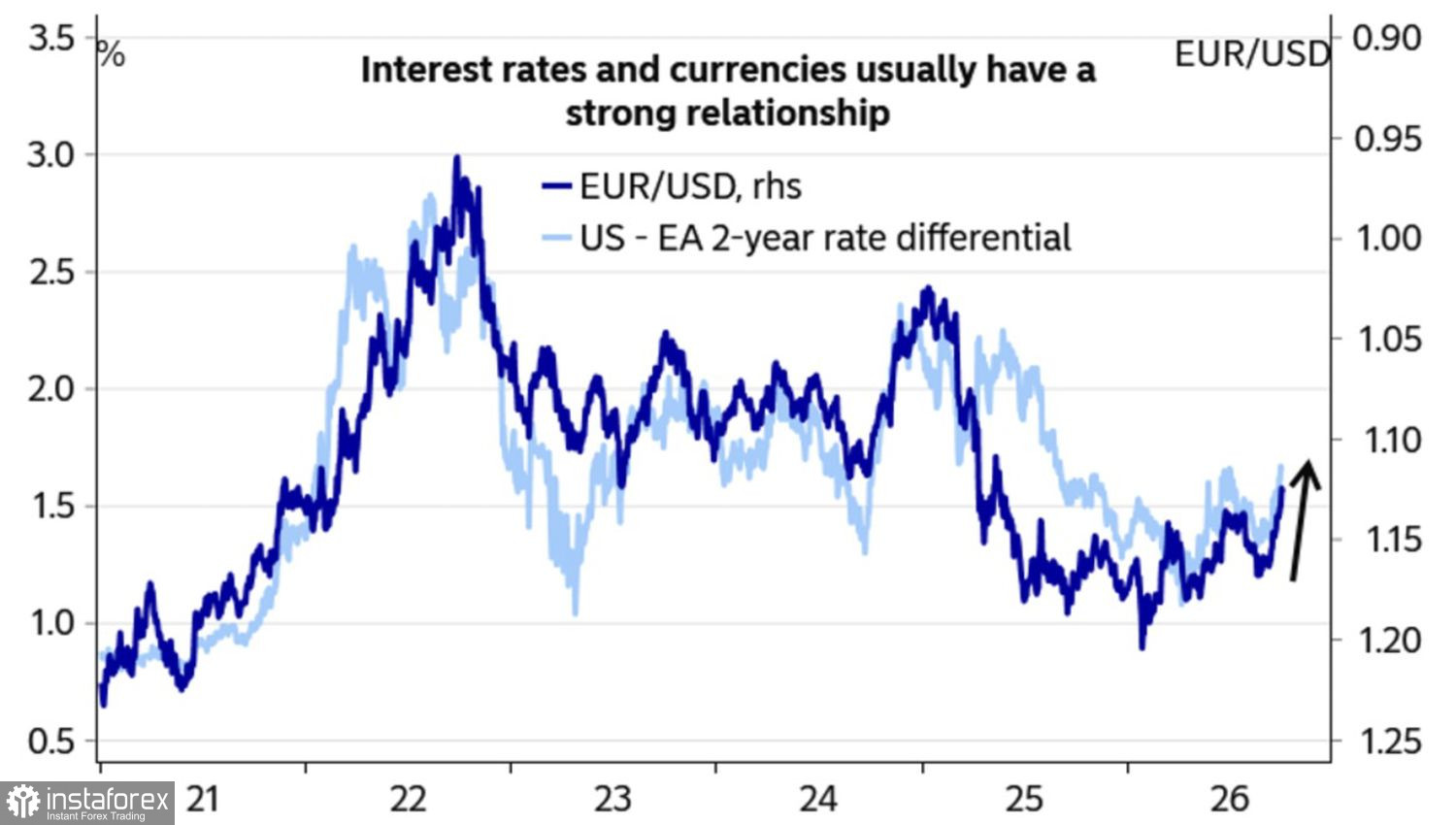
A clearer picture on the other side of the Atlantic is a bullish factor for the dollar. The core personal consumption expenditures price index remains around 3%, while unemployment at 4.2% indicates full employment. A tight labor market requires the Federal Reserve to continue its monetary tightening cycle to prevent wage growth and services inflation from accelerating.
Political risks in France remain a negative factor for the euro. Investors no longer consider the country a safe haven. The yield on its 10-year bonds experienced its worst quarter since the introduction of the single currency, while the premium over German Bunds jumped to 152 basis points, the highest level since 2011. The deficit was expected to fall to 5% in 2026, but is instead rising, while the country's fiscal watchdog called the new budget "optimistic."
Euro-area inflation unexpectedly accelerated to 3.8% in September, its highest level since 2023, from 3.2% a month earlier. The core rate rose to 2.5%, as expected, while services inflation increased to 3.2%. Bloomberg Economics believes the acceleration was driven by a one-off increase in airfares and expects the ECB to skip October and raise rates for the final time in December.
Traders sharply reduced expectations for ECB monetary tightening to two or three moves by the end of next year, compared with four moves that had previously been fully priced in. The difference in the pace of monetary tightening by the Federal Reserve and the ECB remains a key factor for EUR/USD and will determine the direction of the pair in the coming months.
Thus, high euro-area inflation and the ECB's hawkish rhetoric are supporting the euro. The currency is under pressure from the asymmetric energy shock, the political crisis in France, and the more decisive stance of the Federal Reserve.
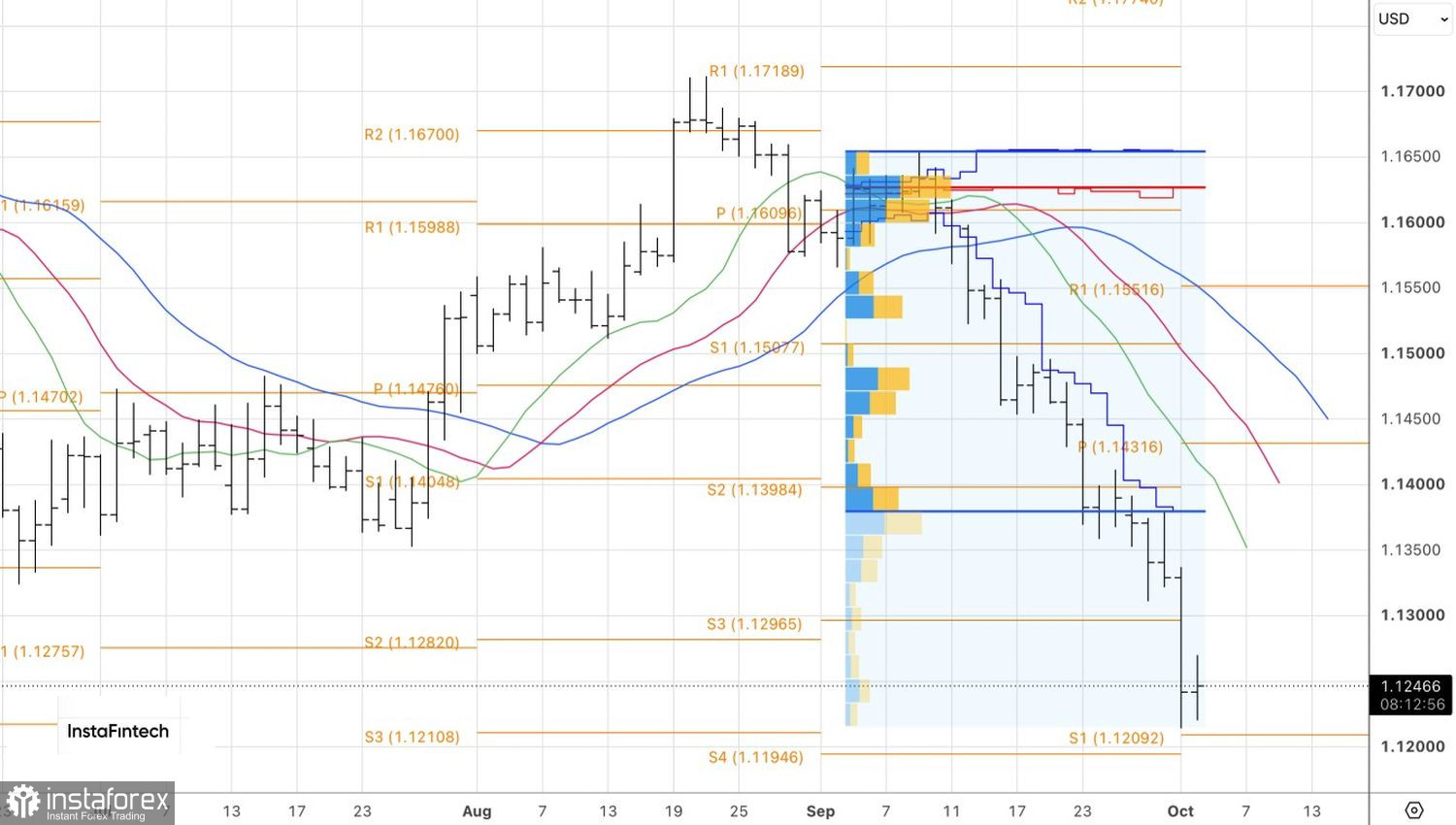
Technically, an inside bar is highly likely to form on the daily EUR/USD chart. This provides grounds for placing pending buy orders at 1.127 and sell orders at 1.122.

