
यह भी देखें


 19.10.2026 06:55 AM
Newly appointed Iranian Defense Minister Mehrdad Ketabchi, whose nomination was approved by parliament, issued a stark warning to Washington against escalation. The minister said Tehran has substantially strengthened its military capabilities in recent months based on lessons from clashes with US forces, and warned that any further "miscalculation" by American forces would be met with "unexpected and large-scale resistance."
At the same time, Tehran hopes to pursue a diplomatic route to reopen the Strait of Hormuz. Iranian Foreign Minister Abbas Araghchi told the OIC summit in Dubai that a concrete plan was transmitted to the US via Qatar that could fully restore commercial shipping within seven days: "The choice now rests with the United States." We cannot expect safety at sea while Iran is facing strikes, a blockade, and threats, he added.
Ismail Bagai, the spokesperson for the Iranian Ministry of Foreign Affairs, confirmed continued indirect contacts with the White House, listing preconditions that include lifting the US maritime blockade of the strait, cessation of hostilities across all fronts, and unfreezing Iran's assets. Mohsen Rezaei, secretary of the Supreme National Security Council, said that Washington has sent a reply expressing partial agreement on some demands while remaining ambiguous on others.
Uncertainty about shipping prospects in the Persian Gulf and the persistent threat of direct strikes triggered a fresh commodity rally. Brent crude climbed above September's peak levels. Attempts by the White House to calm the fuel market backfired politically for Donald Trump: the decision to greenlight deliveries of Russian diesel to global markets provoked strong domestic backlash. Polling from October 14, 2026, shows:
Against the backdrop of the energy shock and controversial foreign policy steps, Trump's approval rating fell to a critical 30%, posing a direct threat to Republicans in the November 3, 2026, midterms.
If control of the House flips to the Democrats, the administration will face a wave of tough investigations into the terms of the deal and the suspension of anti-Russian sanctions — possibly even renewed impeachment proceedings. Bloomberg analysts estimate US motorists will pay an extra $165-350 billion for fuel above normal levels, with the final bill depending on how long the Strait of Hormuz remains closed.
The main obstacle to faster relief at the pump is price asymmetry: oil price spikes are passed through to gasoline prices almost immediately, while barreling declines reach the pump with a lag of several weeks. A further bullish trigger for oil came from the US Energy Department's report showing a steep drawdown in commercial crude stocks — down 8.56 million barrels for the week to October 9.
For Donald Trump, it is now politically critical to demonstrate tangible economic wins and drive down fuel costs. However, experts warn that political haste does not guarantee diplomatic success. Without a durable halt to strikes on energy infrastructure and a mutually agreed plan, a genuine move toward peace looks unlikely.
Friday's session on Wall Street ended with a sharp sell-off. The epicenter of pressure was the semiconductor sector, which posted its eighth straight decline, the longest sustained sell-off for the industry since the 2008 crisis. Infrastructure provider CoreWeave plunged by 11.9% (weekly losses reached a catastrophic 23.7%), stoking investor panic over credit risks at highly leveraged AI startups.
Nvidia shares fell by 1.4%, Micron dropped by 5.6%, and AMD slid by 5.9%. Tesla's market cap lost about 2.1%, and SpaceX dipped by 1.7% amid market chatter about a possible merger. Over the week:
The sell-off was amplified by disappointing revenue figures from Anthropic and fresh macro prints showing acceleration in consumer and producer inflation.
Oct. 19, 04:30 / China / *** / 70-City Residential Price Index (September) / prev.: -3.2% / actual: -3.0% / cons.: -3.1% / Brent — down, USD/CNY — up
Primary-market housing prices in China for August recorded the smallest monthly decline since late last year, reflecting the impact of regulatory support measures for the construction sector. Easing in negative momentum was visible in Guangzhou, Shenzhen, Chongqing, and Tianjin, while Shanghai continued to see solid 3% annual gains per square meter, and Beijing's downtrend remained unchanged. Despite 38 consecutive months of price deterioration, policy stimulus is gradually stabilizing conditions in the largest urban agglomerations. Analysts expect the housing downturn to deepen again in September. Further cooling in the property sector would weigh on Brent crude and push USD/CNY higher.
Oct. 19, 05:00 / China / *** / GDP (Q3) / prev.: 5.0% / actual: 4.3% / cons.: 4.4% / Brent — up, USD/CNY — down
China's economic expansion slowed in Q3 to its weakest pace since late 2022, coming in below the government's official target. The main drags were weak domestic demand, muted private sector activity, and the prolonged developer crisis, which outweighed strong export inflows driven by AI-equipment shipments. At the same time, high-tech sectors and services remain resilient, allowing the economy to expand by 4.7% in the first half of the year. Consensus had penciled in a modest pickup in Q3 growth. A stronger macro rebound in China would support Brent prices and create upward pressure on the yuan.
Oct. 19, 05:00 / China / *** / Industrial Production (September) / prev.: 4.5% / actual: 5.2% / cons.: 5.4% / Brent — up, USD/CNY — down
China's industrial output in August comfortably beat market expectations thanks to a strong acceleration in manufacturing. The growth impulse was led by high-tech engineering:
Broad industrial strength fully offset weakness in coal mining and other raw-material segments. Analysts expect further acceleration in industrial production in the September report. Expanding manufacturing activity will support Brent crude prices and help strengthen the Chinese yuan.
October 19, 05:00 / China / *** / Retail Sales (September) / prev.: 0.6% / actual: 0.4% / cons.: 0.5% / Brent — up, USD/CNY — down
Consumer activity in China slowed to minimal growth in August as interest in big-ticket spending collapsed. Luxury-car sales fell by 18.5%, and demand for jewelry, building materials, and furniture dropped in the 8–18% range. At the same time, core retail turnover excluding autos expanded a healthy 2.5%, supported by explosive demand for smartphones and telecom devices (+27.3%) and steady gains in online shopping and dining. Analysts expect consumer spending to pick up in September. Gradual restoration of domestic demand would support commodity markets and push the yuan higher.
Oct. 19, 15:30 / Canada / *** / Consumer Price Index (CPI) (September) / prev.: 3.0% / actual: 3.0% / cons.: 3.2% / USD/CAD — down
Canadian consumer inflation held at about 3.0% in August, remaining under the influence of energy prices amid the Middle East conflict. A near-23% jump in gasoline prices was the main pro-inflation driver, while food price inflation slowed more than the headline index for the first time in two years. Core inflation measures tracked closely by the Bank of Canada remain near the 2% target range. Markets are pricing in another leg of September CPI acceleration. Rising inflationary pressure would increase the likelihood of a hawkish tone from the central bank and directly support the Canadian dollar.
Oct. 19, 15:30 / Canada / *** / Consumer Price Index (CPI) (September) / prev.: 2.7% / actual: 2.6% / cons.: 2.6% / USD/CAD — volatile
Headline CPI in Canada eased modestly to 2.6% in August from 2.7% in July. Despite the local cooling, current readings still sit above the economy's long-run historical average of just over 2% over the past three decades. Gradual stabilization in price pressure suggests that the consumer market is adjusting to current financial conditions. Markets expect September inflation to remain at this level.
Oct. 19, 17:00 / US / ** / NAHB Housing Market Index (October, survey) / prev.: 35 / actual: 32 / cons.: 31 / USDX (six-currency dollar index) — down
US homebuilder sentiment fell to its weakest level in a year in September as buyer caution increased. Current sales assessments dropped by four points, and six-month sales expectations slid to 37, despite steady traffic at new-home sites. To stimulate demand amid high mortgage costs, 38% of builders have resorted to outright price cuts on new homes. The October consensus expects the confidence indicator to drift lower. Deepening weakness in the housing sector would pressure the US dollar.
Oct. 20, 04:15 / China / *** / 1-Year Loan Prime Rate (LPR) / prev.: 3.0% / actual: 3.0% / cons.: 3.0% / Brent — up, USD/CNY — down
The People's Bank of China kept policy on hold, leaving the 1-year LPR at an all-time low for the sixteenth consecutive month. The central bank preferred to keep funding conditions stable as it balances:
Industrial acceleration sits alongside muted consumer demand and an ongoing correction in real estate. At the same time, a gradual recovery in lending volumes suggests earlier policy measures are taking effect. Maintaining stimulative borrowing costs should continue to feed liquidity into key sectors, supporting Brent crude and helping the Chinese yuan.
Oct. 20, 09:00 / Germany / ** / Producer Price Index (PPI) (September) / prev.: 3.0% / actual: 4.6% / cons.: 5.3% / EUR/USD — up
German producer prices accelerated sharply in September, marking the fastest rise since spring 2023 and extending five months of continuous increases. Key drivers of industrial inflation included:
Analysts expect further upward pressure on factory gate prices in September. Rising cost pressures at early production stages will bolster the euro.
Oct. 20, 09:00 / UK / ** / Change in Employment (three-month period to August) / prev.: 83k / actual: 67k / cons.: 60k / GBP/USD — down
Job creation in the UK slowed notably over the three months to July, registering the weakest net gain since late winter. Growth in full-time positions was largely offset by declines in part-time roles, while the overall employment rate remained at 75.1%. Notably, the number of Brits working multiple jobs rose to 1.283 million amid elevated household expenditure. Analysts expect further softening in hiring in the next release. Cooling labor market conditions will weigh on the pound.
Oct. 20, 12:00 / Eurozone / *** / ZEW Economic Sentiment Index (October, survey) / prev.: 31.4 / actual: 25.8 / cons.: 24.2 / EUR/USD — down
ZEW's October survey showed a sharp drop in analyst and investor optimism about the eurozone outlook. More than half of respondents saw no basis for a rebound in economic activity over the next six months, alongside a large 28.7-point jump in inflation expectations. Despite a modest improvement in current conditions readings, overall confidence among institutional participants has been undermined by geopolitical uncertainty and high cost pressures. Consensus expects further deterioration in business sentiment in October. Rising expert pessimism about the region's economic resilience will weigh on the euro.
October 20, 12:00 / Eurozone / ** / Construction Output (August) / prev.: -1.4% / actual: -2.0% / cons.: -2.3% / EUR/USD — down
July construction figures for the eurozone showed the steepest decline since late winter as specialized and general building activity continued to contract. Modest gains in civil engineering failed to offset weaker developer activity in:
Germany provided some local support, but markets expect a further widening of the downturn in construction in August. A deterioration in the building sector will weigh on the euro.
Oct. 20, 12:00 / Germany / *** / ZEW Economic Sentiment Index (October) / prev.: 34.2 / actual: 34.7 / cons.: 31.6 / EUR/USD — down
Germany's September ZEW sentiment index reached its highest level since February, thanks to fiscal stimulus and a notable improvement in current conditions, but it still missed some forecasts. Optimism was uneven:
Analysts expect the ZEW index to ease in October. Cooling institutional sentiment will put pressure on the euro.
Oct. 20, 15:15 / US / * / ADP Average Weekly Job Gains / prev.: 23.75k / actual: 24.75k / cons.: — / USDX (six-currency dollar index) — volatile
The weekly private-sector employment gauge showed a further acceleration in hiring, running well ahead of the two-year average. Continued payroll growth at commercial firms confirms there is no sharp cooling in the US labor market. With no official consensus estimate, the release can increase volatility in the dollar.
Oct. 20, 15:30 / US / ** / Building Permits (September) / prev.: 1.433m / actual: 1.403m / cons.: 1.400m / USDX — down
US building permits fell by 2.1% in August as plans for both multifamily and single-family construction contracted in tandem. The largest drop in new project demand occurred in the Northeast and Midwest, while Western states showed modest recovery, and the South held steady. Analysts expect permit issuance to decline further in September. Weaker developer activity will likely weigh on the dollar.
Oct. 20, 15:30 / US / ** / Housing Starts (September) / prev.: 1.309m / actual: 1.275m / cons.: 1.300m / USDX (six-currency dollar index) — up
The pace of actual housing starts in the US fell for a second consecutive month in August, slipping to the weakest level since last autumn as high mortgage costs and limited availability weigh on construction. The decline was concentrated in the multifamily segment, which plunged by more than 22%, offsetting a modest increase in single-family starts and a regional uptick in the West. Consensus expects residential construction to rebound in September. A pickup in the housing sector would support the US dollar.
Oct. 20, 17:00 / US / ** / Pending Home Sales (September) / prev.: -2.2% / actual: -4.7% / cons.: 1.0% / USDX — up
Pending home sale contracts in the US posted their largest year-over-year decline since early 2025 in August. The pullback in buyer activity was broad-based, hitting the West and Midwest hardest as borrowing costs rose. Analysts expect a sharp bounce in pending transactions in the next report. A return to growth in the housing market would be dollar-positive.
Oct. 20, 23:30 / US / * / Crude Oil Inventories (API, week to Oct. 13) / prev.: -2.09m bbl / actual: -11.1m bbl / cons.: — / Brent — volatile
The industry API report recorded a record drawdown in US commercial crude stocks of more than 11 million barrels for the week, marking the largest weekly draw since late January. The large outflow occurred despite production rising to 13.98 million barrels per day and builds at the Cushing hub, while gasoline inventories edged higher, and distillate stocks fell. Such an outsized withdrawal will keep Brent volatile.
Oct. 21, 02:50 / Japan / *** / Trade Balance (September) / prev.: -£638.3bn / actual: -£1,105.6bn / cons.: -£250.0bn / USD/JPY — down
Japan's August trade deficit widened sharply to the largest gap so far this year. The deterioration reflected a 28.0% surge in imports driven by a jump in crude oil purchases (+58.7%) as supply was redirected around the Strait of Hormuz. Strong export performance — up 19.3% on robust global demand for AI equipment — was overwhelmed by the import surge. Analysts expect a significant narrowing of the trade shortfall in September. A rebalancing of trade flows would support the yen.
Oct. 21, 09:00 / UK / *** / Consumer Price Index (CPI) (September) / prev.: 2.9% / actual: 3.1% / cons.: 3.4% / GBP/USD — up
Annual consumer inflation in the UK accelerated in August to the highest level in five months. The main driver was transport costs after a sharp rise in retail gasoline prices. Upward pressure also came from housing, communications, and leisure, while core inflation remained steady at 2.6%. The September release is expected to show further acceleration in consumer prices. A firmer inflation backdrop would increase the likelihood that the Bank of England maintains a restrictive policy stance, supporting the pound.
Oct. 21, 09:00 / UK / ** / Core Producer Price Index (Core PPI) (September) / prev.: 2.7% / actual: 2.7% / cons.: 2.8% / GBP/USD — up
Core wholesale inflation in the UK, which excludes volatile food and energy, held at 2.7% year-over-year in August, matching July's readout. The stability suggests resilient pricing in the domestic industrial goods sector. Consensus anticipates a modest pickup in core producer inflation in September. Persistent upstream inflation would support the pound sterling.
Oct. 21, 09:00 / UK / ** / Input Prices (September) / prev.: 5.8% / actual: 6.1% / cons.: 6.4% / GBP/USD — up
Producer input costs for UK firms rose strongly in August, beating market expectations and recording the first monthly increase since May. Rising raw material costs point to mounting pressure on corporate margins. Analysts expect further acceleration in input price inflation in September. Pass-through of higher input costs into final prices would lift overall inflation expectations and support the pound.
Oct. 21, 09:00 / UK / ** / Output Prices (PPI Finished Goods) (September) / prev.: 3.3% / actual: 3.7% / cons.: 4.0% / GBP/USD — up
The UK producer output price index showed the fastest three-month increase in August, beating consensus. Broad-based price rises were led by coke and petroleum products (+49.1%), as well as metals and engineering goods, more than offsetting weakness in autos and food. The September release is expected to show further acceleration in producer output inflation. Stronger price momentum at the factory gate will be supportive for the pound.
Oct. 21, 09:00 / UK / Retail Prices Index (RPI) (September) / prev.: 3.2% / actual: 3.4% / cons.: 3.9% / GBP/USD — up
UK retail prices accelerated year-over-year in August, reaching the highest level since early spring. The strengthening of the index widely used to index contracts and debt obligations confirms rising price pressures across the economy. The September release is expected to show further acceleration in retail inflation. Persistently high price growth would raise the odds of a hawkish tone from the Bank of England and support the pound sterling.
Oct. 21, 17:30 / US / ** / Crude Oil Inventories (EIA, week to Oct. 14) / prev.: -3.186m bbl / actual: -8.557m bbl / cons.: -4.804m bbl / Brent — up
The latest US Energy Information Administration report showed a deep drawdown in commercial crude inventories, the largest weekly decline since February and well above market estimates. The large withdrawal occurred despite inflows to the Cushing hub and a modest drop in net imports, even as refinery runs ticked up. The report also recorded a rise in gasoline stocks and a notable decline in distillate inventories. Analysts expect continued inventory depletion in upcoming releases. If the downtrend in commercial stocks persists, it will provide direct support to Brent crude prices.
Oct. 21, 19:00 / Russia / ** / Producer Price Index (PPI) (September) / prev.: 6.6% / actual: 6.5% / cons.: 6.7% / USD/RUB — down
Russia's wholesale price inflation in August showed a marginal slowdown, holding near the previous month's level. Despite the slight easing, PPI remains elevated, reflecting persistent cost pressures in the industrial sector. Consensus expects a modest pick-up in industrial inflation in September. A renewed rise in wholesale price pressures could support the Russian ruble.
Also of note:
Oct. 19, 02:05 / Australia / Speech by RBA Deputy Governor Christopher Kent / AUD/USD
Numerous central bank officials are speaking across the period. Their comments often trigger FX volatility because they can signal changes in policy plans.
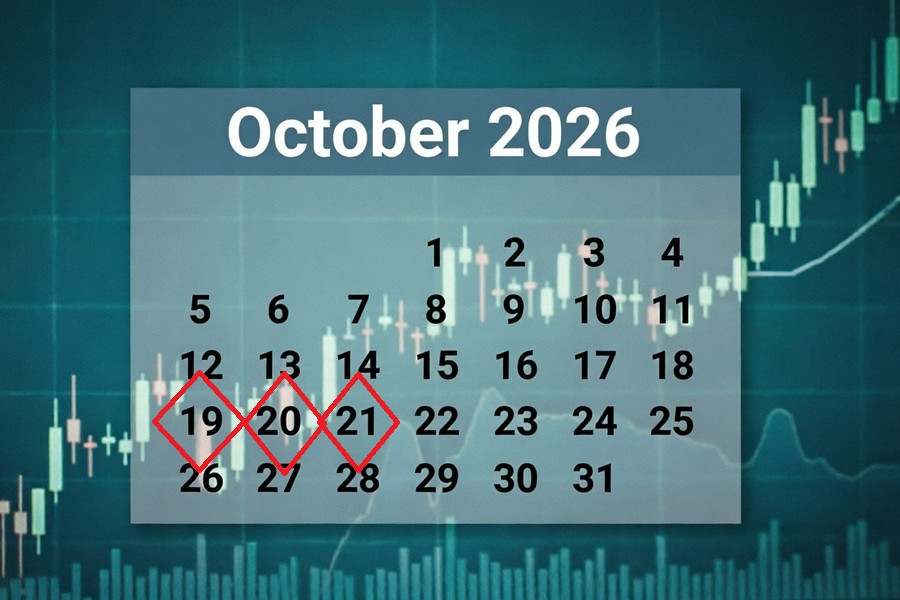
The economic calendar is available via the link. All indicators are shown year-over-year (y/y) unless otherwise noted. Monthly figures are marked (m/m). Trade balance, export, and import values are listed in local currency. An asterisk (*) denotes the report's importance for instruments available on the InstaTrade platform (in ascending order). Publication times are stated in MSK (GMT+3). Open a trading account here. See also InstaTrade market video updates and download the MobileTrader app to keep instruments at hand.

