یہ بھی دیکھیں


 29.04.2026 08:42 AM
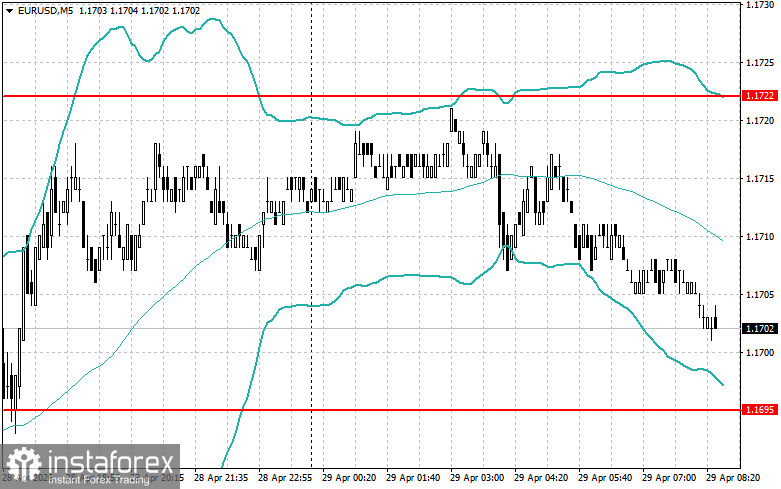
The euro, pound, and other risk assets recovered some ground after an active sell-off, likely due to positioning ahead of the upcoming FOMC meeting in the United States.
At the beginning of the American session, the U.S. consumer confidence index rose to 92.8 points, providing significant support for the dollar. This optimistic figure, reflecting consumer sentiment regarding the current economic situation and outlook, exceeded analysts' expectations and became one of the key factors influencing currency market dynamics. The strengthening of the dollar, in turn, impacted the value of other reserve currencies, creating some tension in the financial markets.
Consumer confidence data is one of the leading indicators of future consumer spending, which constitutes a significant portion of U.S. GDP. The increase in this indicator to 92.8 points indicates that Americans feel confident despite the ongoing situation in the Middle East, which has led to a sharp rise in U.S. energy prices.
Today, the first half of the day in European financial markets is expected to be busy, as several important macroeconomic indicators are set to be released, capable of significantly affecting the dynamics of the euro and overall market sentiment. Analysts and traders will focus on figures for private-sector lending in the Eurozone, changes in the M3 money supply aggregate, and the consumer price index in Germany.
The publication of data on private sector lending in the Eurozone is a key indicator reflecting the health of the banking system and business activity. Steady lending growth indicates that banks are willing to issue loans and that demand from enterprises and households is increasing. Simultaneously, changes in the M3 money supply aggregate in the Eurozone will provide additional information about liquidity in the economy. An increase in M3 could signal future inflationary pressures, which would be a cause for concern for the European Central Bank.
The consumer price index in Germany, as the Eurozone's largest economy, plays a special role in shaping the region's overall inflation picture. Moderate inflation growth after the March spike will be viewed as a sign of a healthy economy; however, an acceleration could raise concerns at the ECB and prompt it to adopt a stricter monetary policy.
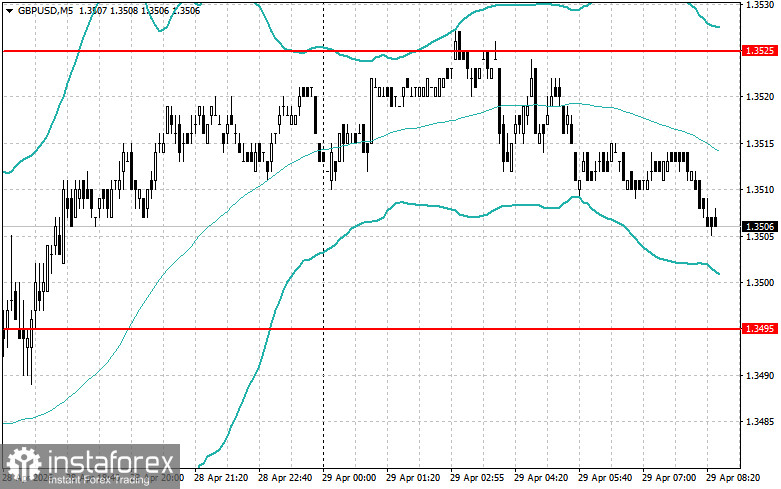
As for the British pound, markets in the UK are expected to remain calm today due to the absence of relevant data, which may create conditions for renewed pressure on the GBP/USD pair. After the significant correction observed during the second half of the previous American trading session, the British pound again faced some pressure. However, the absence of new positive or negative news from the UK today creates a vacuum in which previous trends may re-emerge.
If the data aligns with economists' expectations, it would be prudent to act based on the Mean Reversion strategy. If the data significantly exceeds or falls short of economists' expectations, the Momentum strategy would be the best approach.