
یہ بھی دیکھیں


 05.05.2026 04:17 AM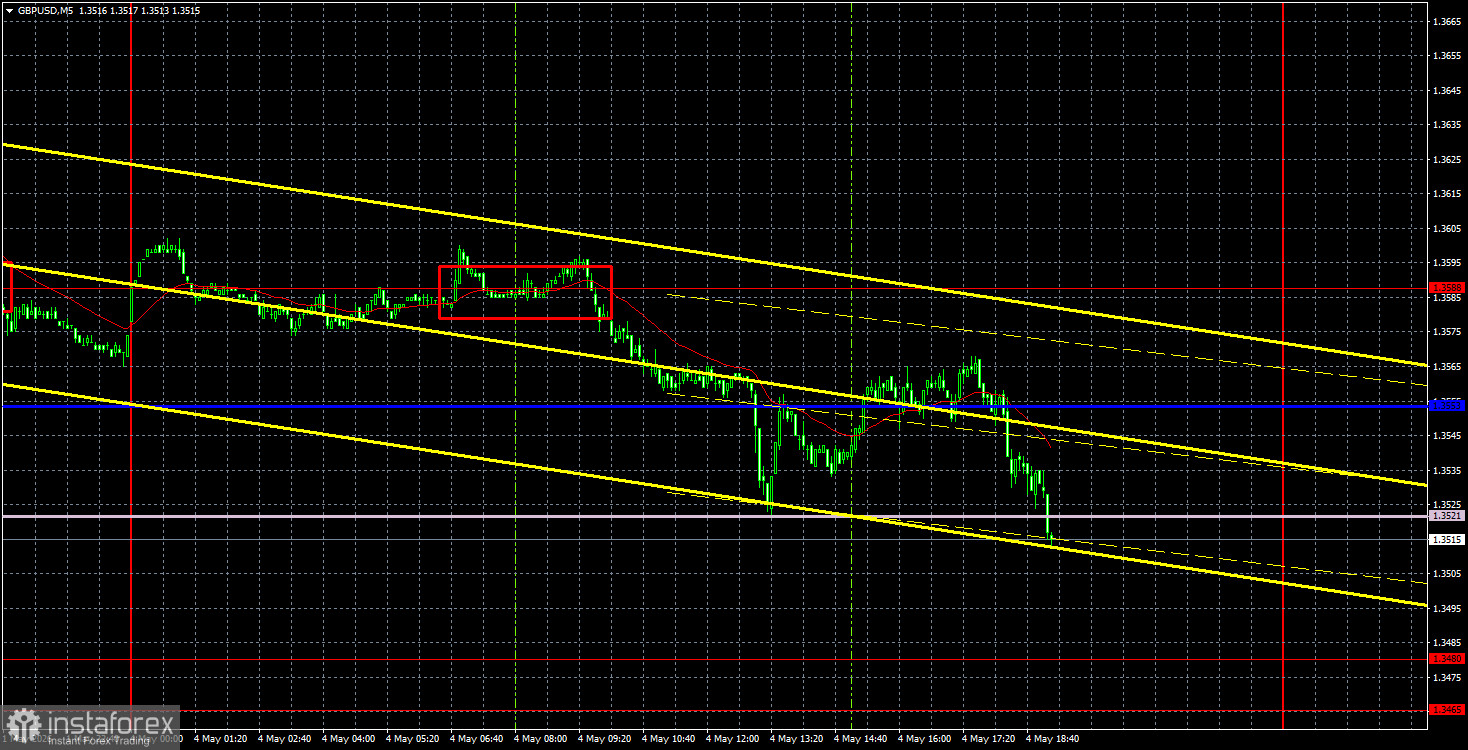
The GBP/USD currency pair also declined on Monday, but unlike the EUR/USD pair, it maintains an upward bias. Last week, the 1.3588 level was broken, which served as the upper boundary of the sideways channel. This week, the British pound has yet to consolidate below the Senkou Span B line, so the upward trend is still intact. On Monday, there were no significant news events, aside from geopolitical ones. If it weren't for the news about the attack on an American destroyer in the Persian Gulf, we might not have seen any decline in the pair. However, once again, the factor of capital flight to safety played a role. For the new bullish trend of the dollar, this alone is insufficient, but it is enough for certain segments of dollar growth. Overall, the British pound continues to perform better than the dollar and even better than the euro. Donald Trump may soon impose new tariffs against the European Union, bringing the market back to the main theme of last year—the trade war. It was precisely because of this that the dollar weakened for most of 2025.
On the hourly timeframe, the upward trend will be canceled only if the pound consolidates below the 1.3465-1.3480 area. We do not yet see reasons for such a sharp decline, but this week will see plenty of macroeconomic events. And something tells us that there won't be a shortage of geopolitical news either...
On the 5-minute timeframe, traders could open short positions at the opening of the European trading session, as the price bounced off the 1.3588 level. All subsequent signals were best left untraded, as the distance between the Ichimoku indicator lines and the level of 1.3588 did not exceed 30 pips.
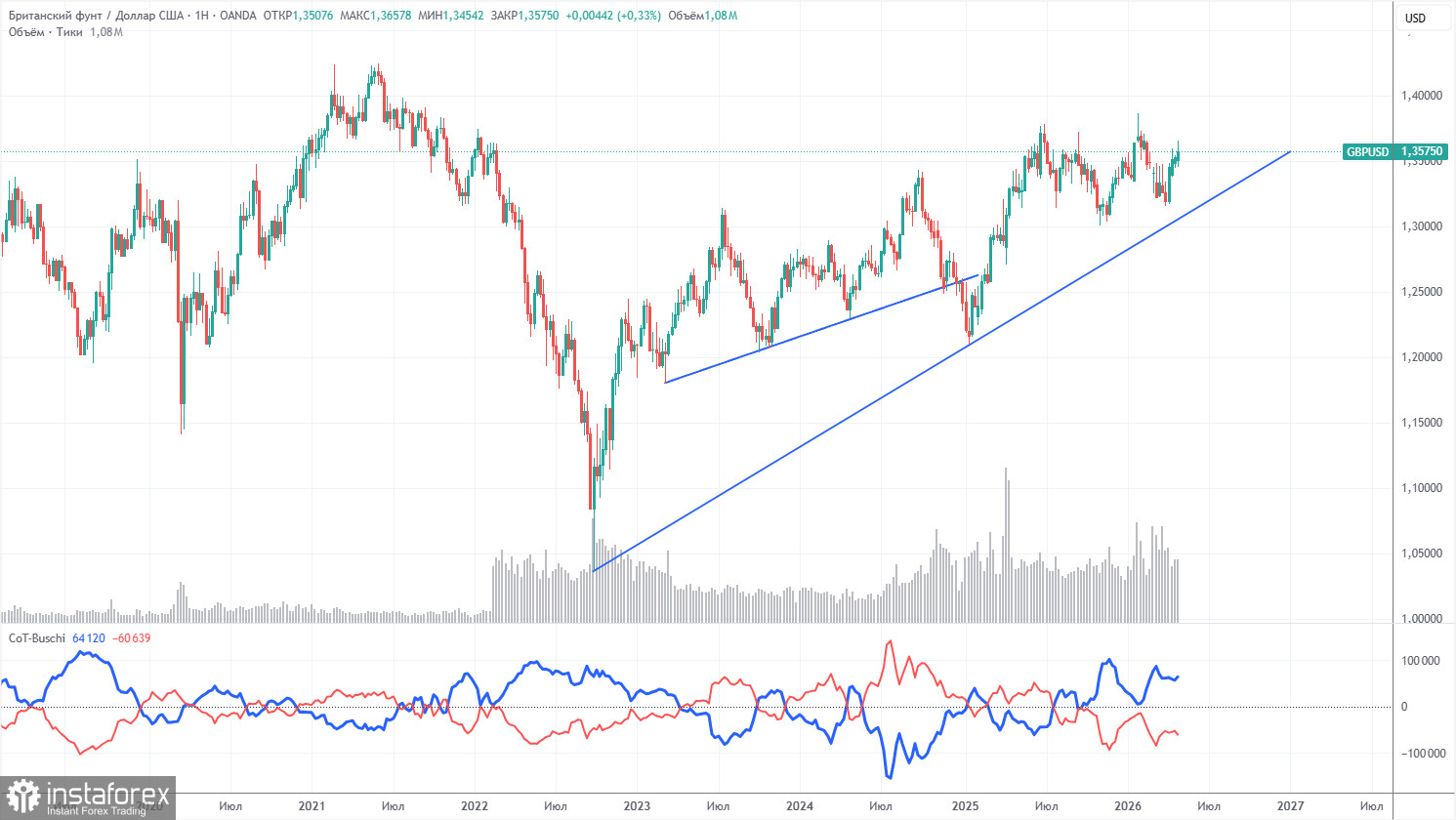
COT reports for the British pound show that, in recent years, sentiment among commercial traders has been constantly changing. The red and blue lines, which represent the net positions of commercial and non-commercial traders, frequently intersect and are mostly near the zero mark. Currently, the lines are diverging, with non-commercial traders still holding net short positions. Given the events in the Middle East, it is no surprise that demand for riskier currencies is falling, while demand for the dollar is rising.
In the long term, the dollar continues to decline due to Trump's policies, clearly visible on the weekly timeframe. The trade war will continue, in one form or another, for a long time, and Trump's policy is aimed directly and indirectly at weakening the American currency. However, geopolitical factors are currently dominating and have recently provided significant support for the dollar. Given the ongoing conflict in the Middle East, the US dollar may still have growth potential.
According to the latest COT report (dated April 28), the "Non-commercial" group closed 3,500 BUY contracts and opened 5,000 SELL contracts. Thus, the net position of non-commercial traders fell by 8,500 contracts over the week.
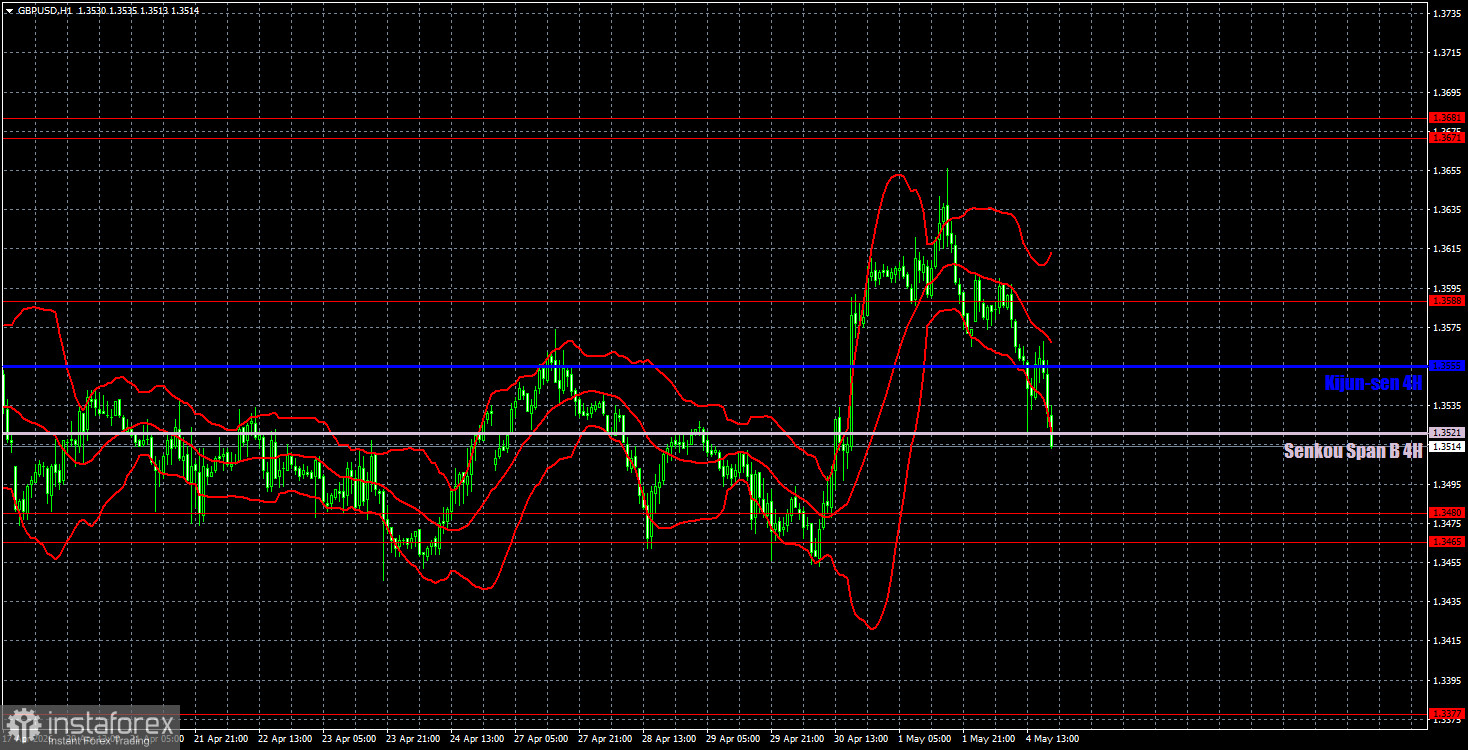
On the hourly timeframe, the GBP/USD pair is continuing to form an upward trend, which could be reversed if the British pound consolidates below the 1.3465-1.3480 area. The influence of geopolitics appears to be weakening, as evidenced by recent movements. However, military actions in the region are currently on pause. The Strait of Hormuz remains blocked, and there is no progress in negotiations, although some reports suggest that discussions are ongoing at a distance, without significant progress. This situation allows the British pound to maintain its bullish sentiment.
For May 5, we highlight the following important trading levels: 1.3096-1.3115, 1.3179-1.3187, 1.3369-1.3377, 1.3465-1.3480, 1.3588, 1.3671-1.3681, 1.3751-1.3763. The Senkou Span B line (1.3521) and the Kijun-sen line (1.3553) may also serve as sources of signals. It is recommended to set a stop loss to breakeven when the price moves in the correct direction by 20 pips. The lines of the Ichimoku indicator may shift throughout the day, which should be taken into account when determining trading signals.
On Tuesday in the UK, there are no significant events planned, while the US will release relatively important ISM and JOLTs reports. It would be wise to focus on the ISM report and geopolitics.
Today, traders may consider short positions targeting 1.3465-1.3480 if the price consolidates below the Senkou Span B line. Long positions can be opened with a target area of 1.3588 after the price rebounds from the Senkou Span B line or the area of 1.3465-1.3480.


