
Lihat juga


 22.07.2026 08:21 PM
For the eleventh consecutive day, the United States has continued its strikes on Iran, while Tehran has responded with attacks on U.S. bases in Kuwait, Bahrain, and Jordan. Both President Donald Trump and Iranian officials acknowledge that a resumption of negotiations is unlikely in the near term. As a result, EUR/USD has become a hostage to a conflict beyond its control.
Brent crude has surged to $95 per barrel over the past two weeks, and rising oil prices have unsettled the bond market. Yields on 10-year and 30-year U.S. Treasury bonds have climbed to two-month highs amid concerns that inflationary pressures could force the Federal Reserve to raise interest rates. Investors have once again begun treating geopolitics as a key driver of central bank policy, but this time the ECB—not the Fed—will speak first.
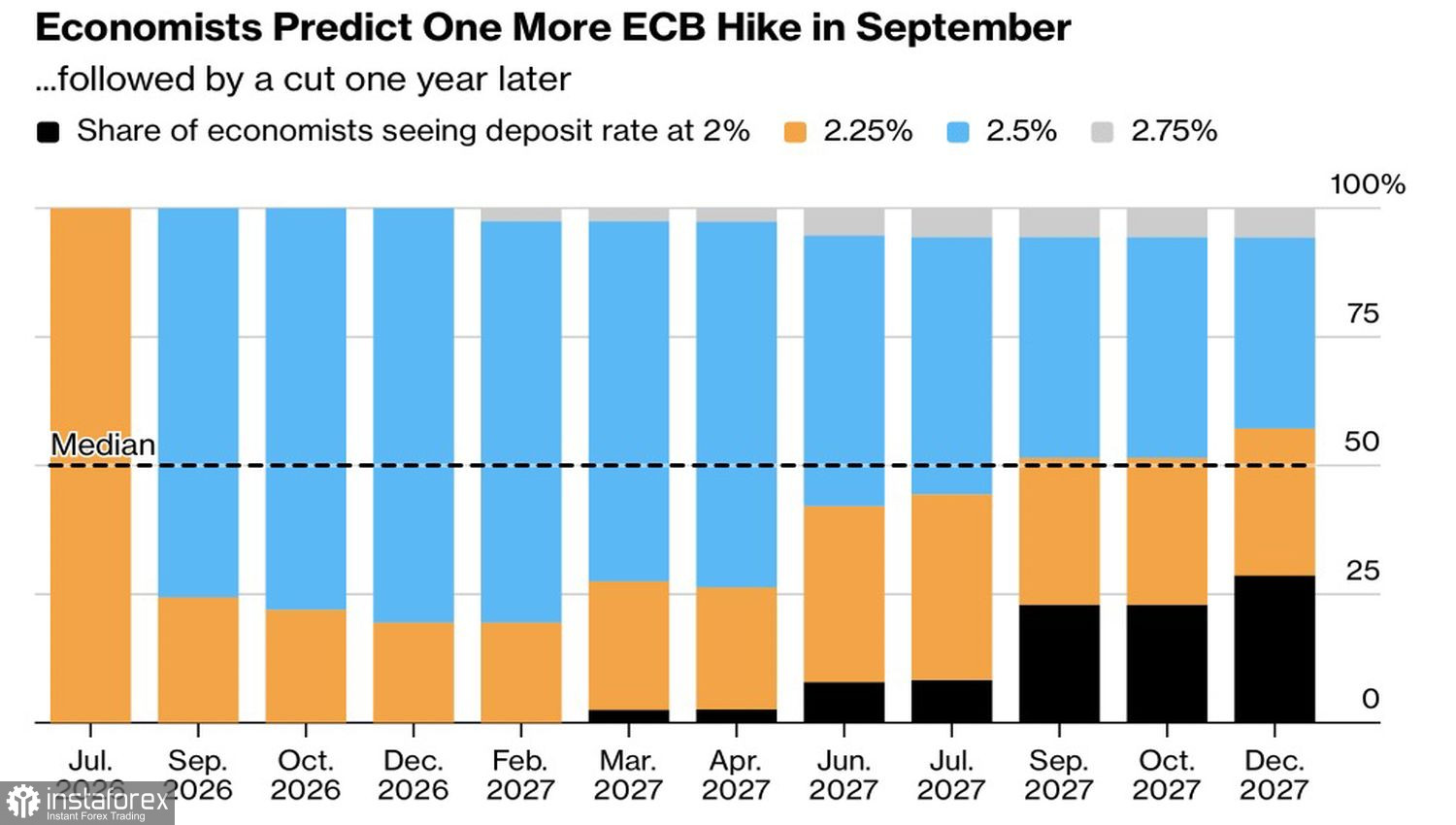
The ECB Governing Council will meet on July 23, one week before the Federal Open Market Committee (FOMC). The benchmark rate is widely expected to remain unchanged at 2.25%, but policymakers are likely to signal their readiness to continue the tightening cycle. In June, the ECB raised borrowing costs for the first time since 2023, citing the prolonged impact of higher energy prices following the closure of the Strait of Hormuz. Inflation had accelerated to 3.2% from 1.9% in February before easing to 2.8% in June—still above the ECB's target.
Bank of Greece Governor Yannis Stournaras believes the latest spike in prices has effectively reset the ECB's inflation battle. Meanwhile, BNP Paribas argues that the threshold for another rate hike has become lower because policymakers no longer need to prove the existence of second-round inflation effects. Markets will be listening closely to ECB President Christine Lagarde to see whether she abandons her May characterization of inflation risks as "balanced." Investors currently expect at least one additional 25-basis-point rate hike before year-end, most likely in September, followed by another increase next year that would bring the deposit rate to 2.75%.
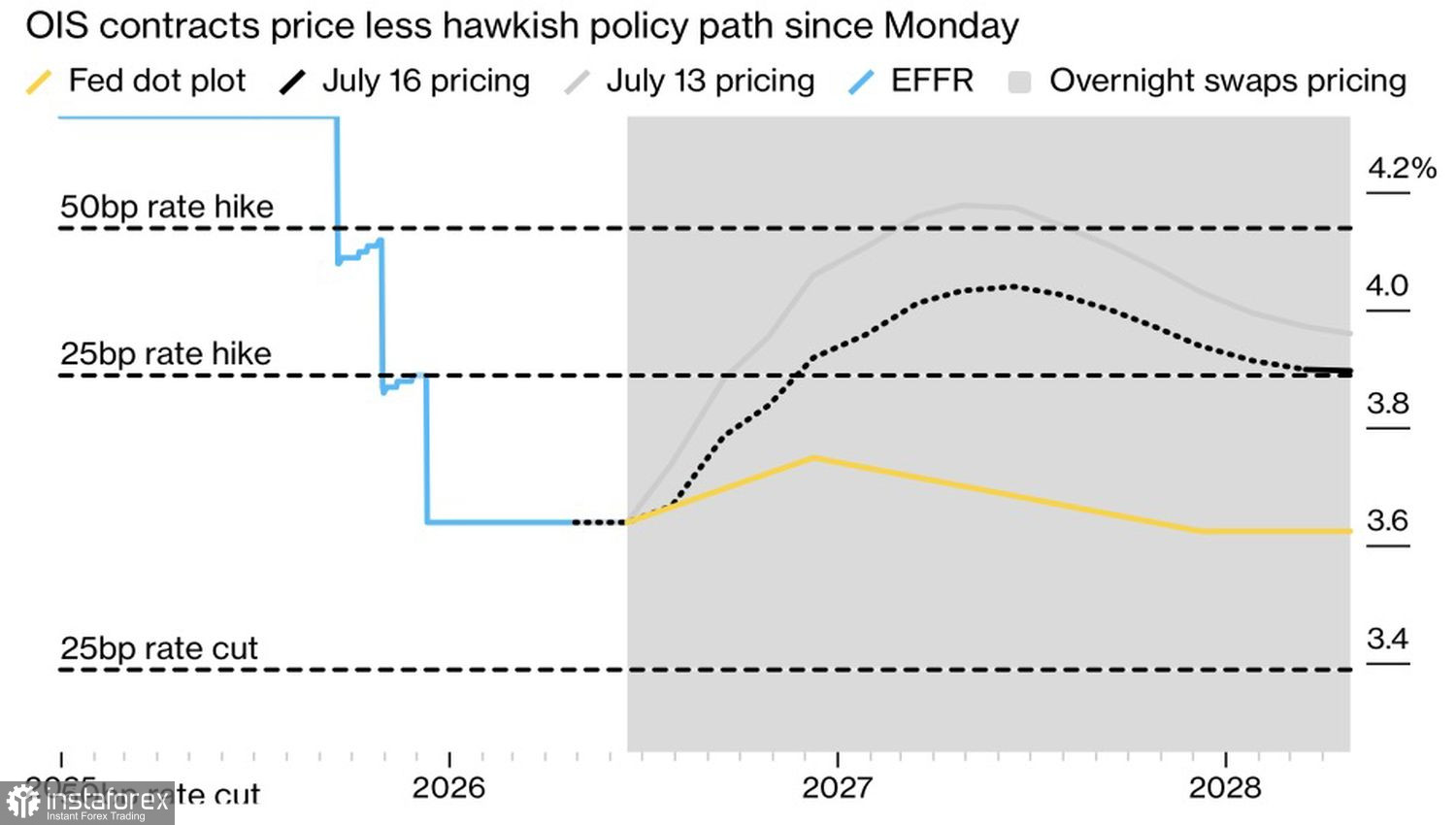
The situation in the United States is markedly different. The first inflation data released under new Fed Chair Kevin Warsh suggest that inflation is easing rather than accelerating. Consumer prices unexpectedly declined in June for the first time in six years, with annual inflation falling to 3.5% from 4.2%. Core inflation appears even more subdued at 2.6%. Warsh has maintained a cautious stance and has avoided declaring victory over inflation, but markets have already reduced expectations for further Fed rate hikes this year.
This creates an interesting divergence: while Europe appears to be preparing for another round of monetary tightening driven by higher energy prices, the United States may gain greater policy flexibility thanks to moderating inflation. The key question is whether this divergence will be enough to support EUR/USD, or whether rising Brent prices will ultimately favor the U.S. dollar in its traditional role as a safe-haven currency.
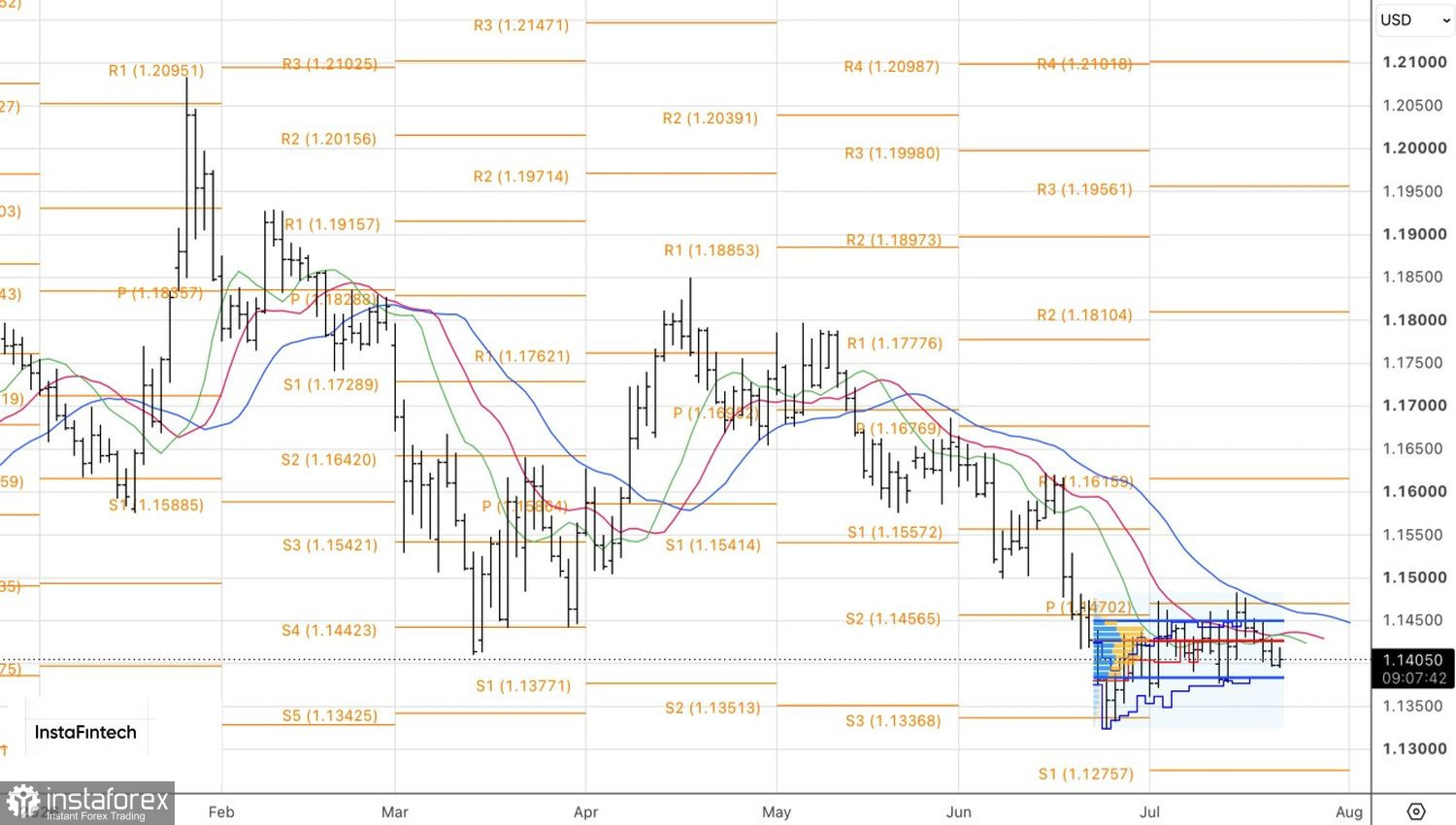
On the daily chart, EUR/USD continues to consolidate in the lower portion of its fair value range between 1.1385 and 1.1485. Unless the pair breaks decisively outside this range, it is likely to remain directionless. For now, range trading within these boundaries continues to be the preferred strategy.


