
Veja também


 17.04.2026 01:55 PM
Despite inflation in the euro area in March coming in higher than initially reported, which points to added upward pressure on prices from the war with Iran, it appears that the ECB is, for now, not inclined to change interest rates.
According to Eurostat, last month's reading was revised up to 2.6 percent from an initial estimate of 2.5 percent. Core inflation stood at 2.3 percent.
In March this year, inflation exceeded the European Central Bank's 2 percent target for the first time, as hostilities in the Middle East pushed energy prices higher. The forecast revision followed similar moves this week by France, Italy, and Spain.
Although markets are pricing in two rate hikes in 2026, traders are currently confident that there will be no change at the next meeting on April 29–30. Rumor has it that ECB officials lean toward keeping rates unchanged this month, postponing a decision on whether the consequences of the war with Iran require a policy response. Policymakers believe that tighter financial conditions help anchor inflation expectations, and that a rate increase would not necessarily alter market prices materially.
Officials also expect that data arriving ahead of the ECB meeting on April 29–30 will not yet provide clear answers on how strongly almost two months of fighting in the Middle East have affected euro area growth, supply chains and the outlook showing inflation trending toward the ECB's 2 percent target. And, since peace talks continue, there remains a chance that damage can be contained.
Many policymakers at the IMF forum noted the ECB's delayed reaction in 2022, which provoked a record inflation spike, as well as the 2011 experience, when two rate increases amid the euro area sovereign debt crisis had to be quickly reversed.
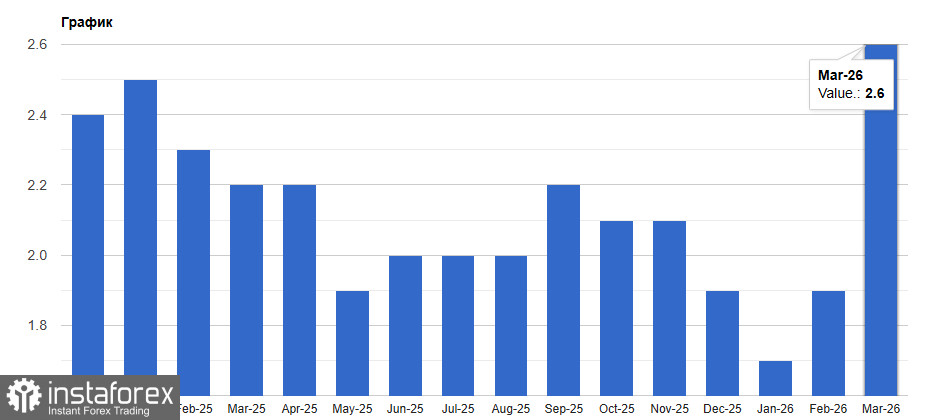
As I noted above, the war-driven surge in energy prices has already pushed regional inflation to 2.6 percent in March, but the persistence of that rise depends largely on the duration of the conflict. At the same time governments and central banks have sharply lowered their growth forecasts.
President Christine Lagarde said this week that the ECB must be absolutely flexible on interest rates, but she stressed that the institution has no bias toward tightening. Nevertheless, investors see rate hikes as inevitable, pricing in two-quarter-point increases this year.
In March, the ECB projected average inflation of 2.6 percent for 2026.
As for the current technical picture of EUR/USD, buyers now need to think about taking the 1.1790 level. Only that will allow a target test of 1.1825. From there one can move up to 1.1854 but achieving that without support from major players will be rather difficult. The most distant target is the high at 1.1880. In the event of a decline, I expect significant buyer activity only around 1.1760. If no one appears there, it would be sensible to wait for a refresh of the low at 1.1725 or to open longs from 1.1680.
Regarding the current technical picture for GBP/USD, pound buyers need to take the nearest resistance at 1.3535. Only that will allow a target of 1.3555, above which a breakthrough will be rather difficult. The most distant target is the 1.3585 area. In the event of a drop, bears will attempt to seize control of 1.3500. If they succeed, a break of the range will deal a serious blow to bulls and push GBP/USD toward the low of 1.3480 with a prospect of moving to 1.3550.


