
Lihat juga


 13.03.2026 12:46 AM
The second estimate of Japan's fourth-quarter GDP was better than the preliminary data, with a revision to +1.3% year-on-year indicating that domestic demand proved stronger than expected. This result is significantly higher than the government's forecast of +0.4% potential growth, suggesting a more positive picture for Japan's economic recovery.
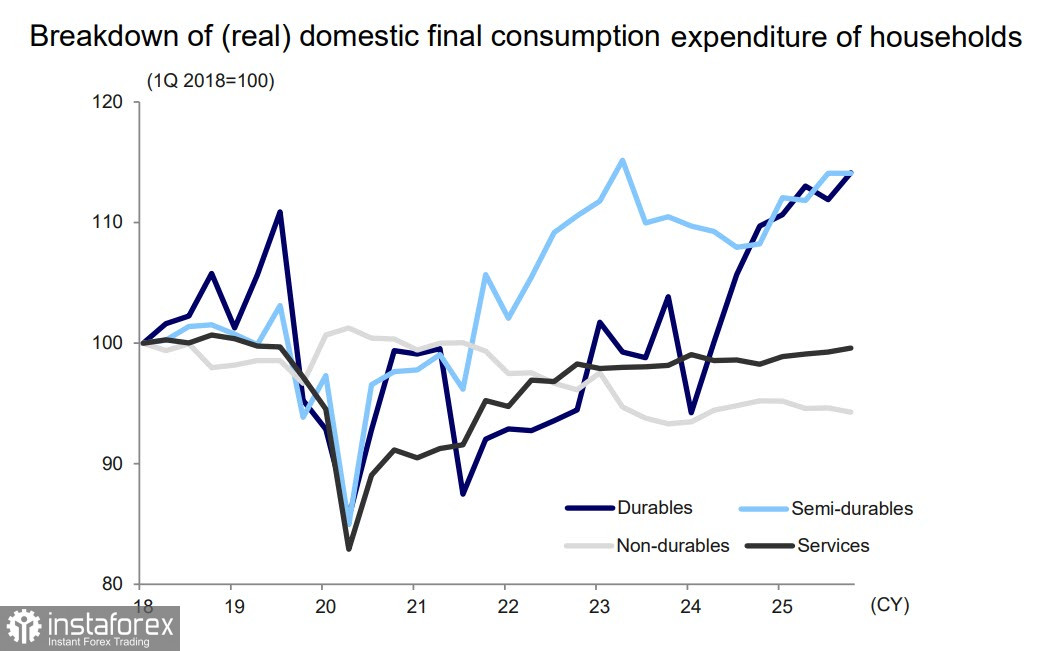
At the same time, oil prices are exerting downward pressure on GDP and will fluctuate based on the level achieved by quotations. According to Mizuho Bank's calculations, if oil prices stabilize around $100 per barrel, this will lead to a 0.3% decrease in GDP, while prices around $120 could reduce GDP by 0.5% over the next year. In turn, this threat puts pressure on the Bank of Japan (BoJ), making it increasingly difficult to justify raising rates amid a slowing economy.
The BoJ is having a meeting on March 19, and the market expects the interest rate to remain unchanged. However, Governor Ueda will present his recommendations, which the market will scrutinize for indications of a potential rate hike in April. Since Japan has sufficient oil reserves to comfortably weather at least one month, we see no grounds for any unexpected statements from Ueda or significant fluctuations in the yen's exchange rate.
A short speculative position on the yen has formed again after the publication of the CFTC report, with a volume of -$1.3 billion, reflecting a weekly change of -$2.24 billion. This result is not surprising given Japan's economic sensitivity to energy prices, which are sourced from the Persian Gulf for over 70%. The calculated price has risen above the long-term average.
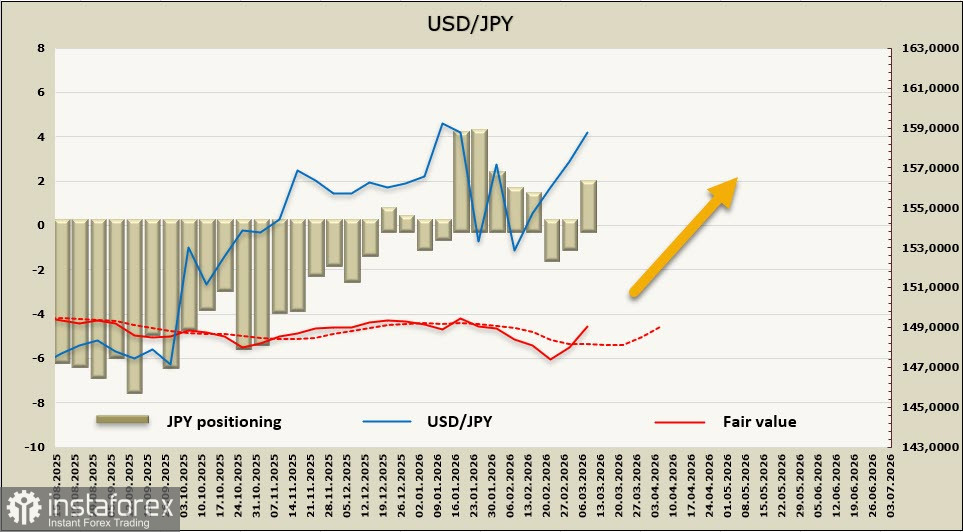
The yen cannot strengthen even amid rising demand for safe-haven assets, as its economic stability is under threat. This is a rare case in which the increase in demand for safe-haven assets does not help stabilize the yen, given clear threats to its own economy. We assume this trend is quite resilient; as long as it remains unclear what damage the war and rising oil prices are inflicting on Japan, the yen will remain weak. In the previous analysis, we suggested that movement toward USD/JPY 160 is more likely than a decline, and this trend has not changed; the risk of testing the peak at 161.96 continues to rise.
You have already liked this post today
* Analisis pasaran yang disiarkan di sini adalah bertujuan untuk meningkatkan kesedaran anda, tetapi tidak untuk memberi arahan untuk membuat perdagangan.


