
Lihat juga


 01.10.2026 12:40 AM
Inflation in France accelerated to 3.4%, the fastest pace in two years. In Italy, price growth sped up to 4.1%, the highest since 2023. In Spain, inflation jumped to 5%, more than twice the European Central Bank's 2% target. By the usual logic, such acceleration should have pushed EUR/USD higher because it brings another rate increase closer. Instead of a celebration, investors are selling French bonds.
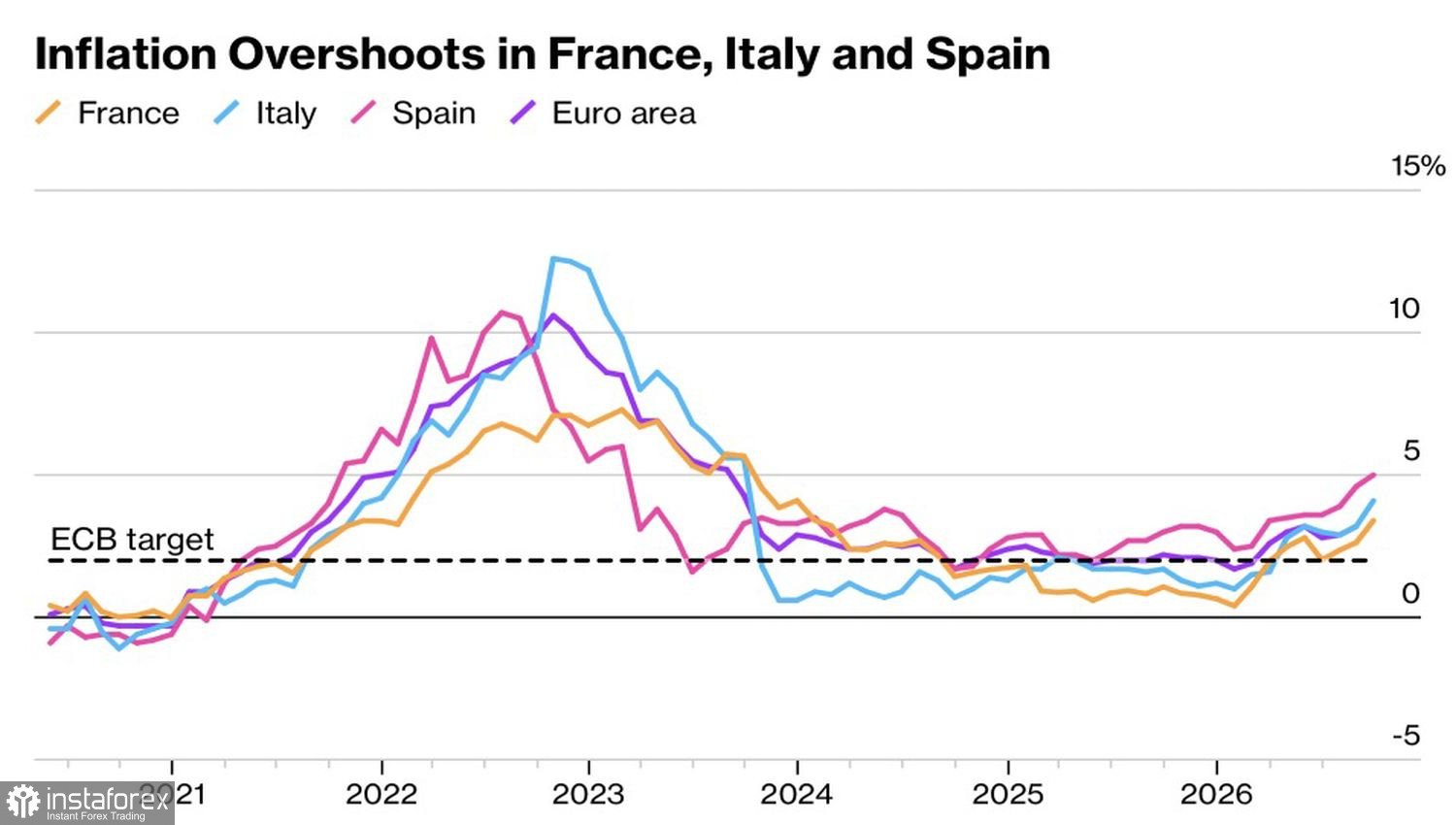
An accelerating inflation rate is a bullish factor for the euro. Eurostat will soon publish the aggregate indicator for 21 member states, and economists expect a three-year high of 3.7%. The ECB has already raised the deposit rate twice to 2.5%, and the futures market prices another 25-bp tightening in 2026. Christine Lagarde supports a "measured response as needed" to control inflation, but she warned that a bond sell-off will constrain both prices and growth.
The inflation jump is driven primarily by fuel and gas; services also contribute. Core CPI is not yet accelerating quickly.
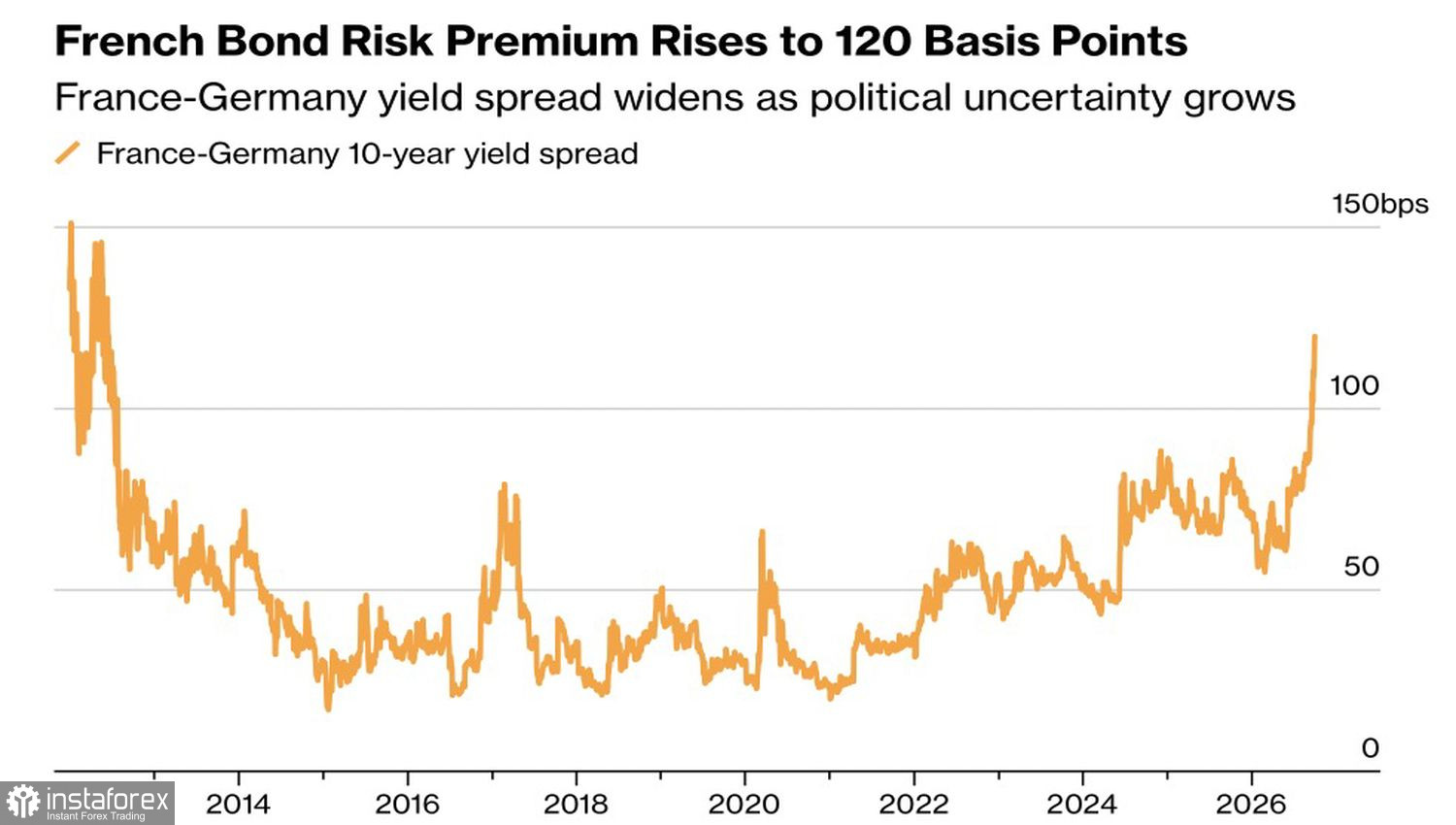
Political risks in France are a negative for the euro. The 10-year spread of French yields over German bunds exceeded 120 bp for the first time since 2012, which traders call a worrying signal. The ECB's accelerating tightening cycle only increases pressure on the French budget, because each new hike raises the cost of servicing public debt and widens the spread, weighing on EUR/USD.
Investors are tense ahead of presidential elections in seven months. The opposition is not compromising with Emmanuel Macron's outgoing administration. New polls indicate a possible second-round matchup between far-right Marine Le Pen and far-left Jean-Luc Melenchon. Natixis says political risk priced into the spread rises as their ratings increase.
Additional pressure on the euro comes from France's fiscal problems. The country's borrowing agency announced a record €340 billion of issuance for next year. The deficit risks rising to 5.4% of GDP in 2026 instead of the expected 5.1% reduction, and long-term borrowing costs have jumped to 2002 levels.
US strength and hawkish Federal Reserve rhetoric are bullish for the dollar. JP Morgan argues that, together with energy risks, this leaves room to reprice rates higher and is keeping a long position in the greenback ahead of US labour market data. However, the bank is not taking excessive risk: the USD index is already near local highs, and September PMIs picked up not only in the US but also in the eurozone, leaving EUR/USD balanced between forces.
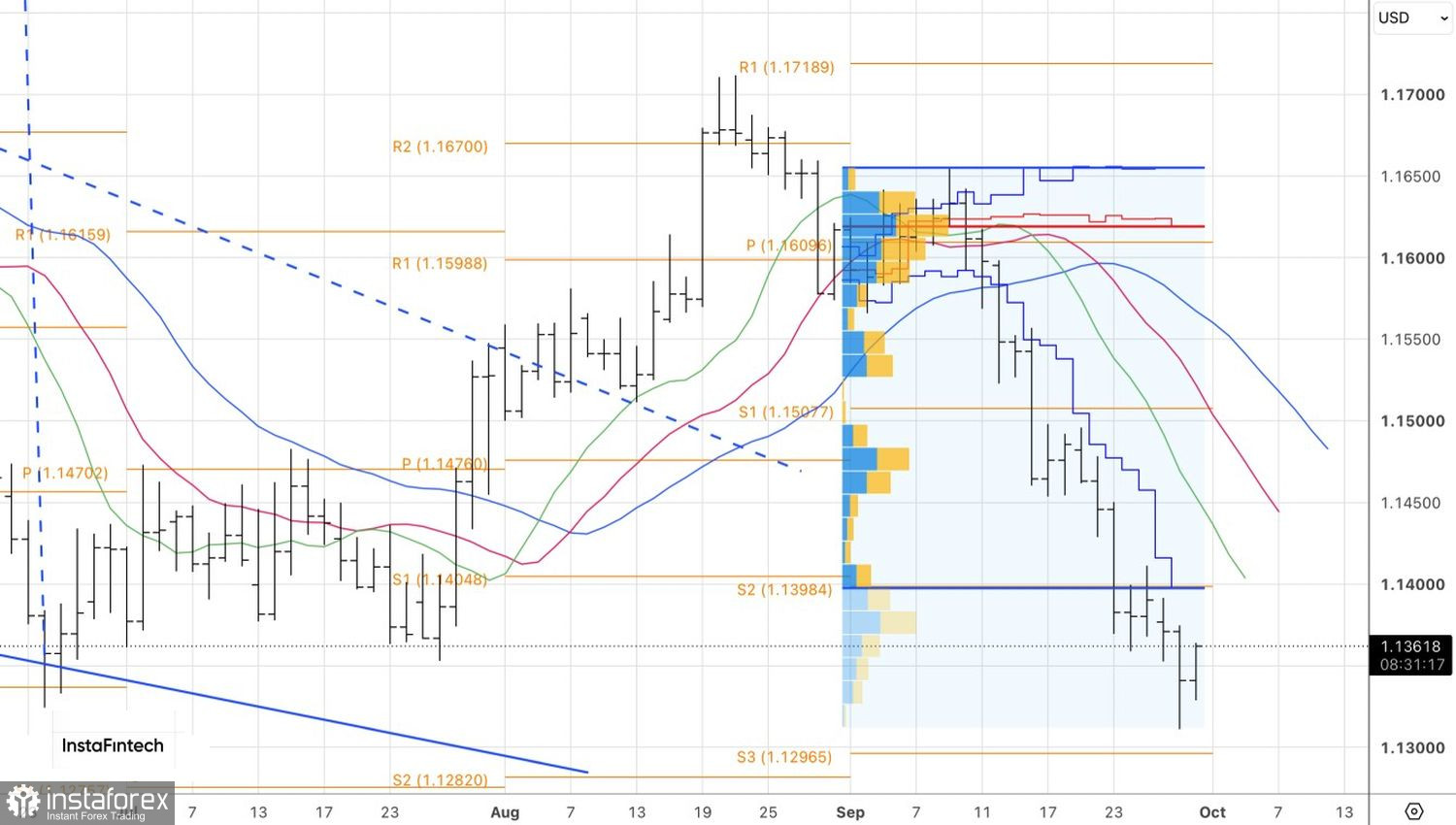
Technically, on the daily chart, EUR/USD shows bulls attempting to recover a bar with a long lower wick. A sustained close above 1.1375 would be a reason to buy in the short term.


