
Veja também


 26.05.2026 12:50 AM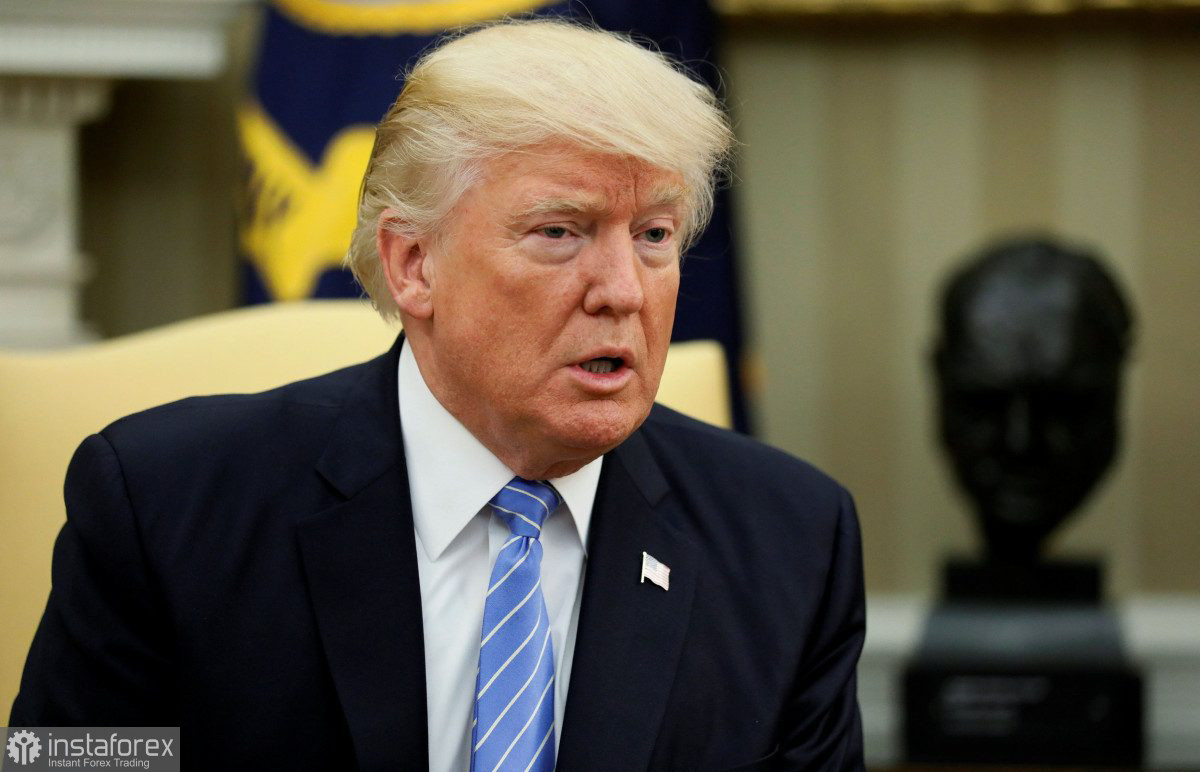
The cost of living for American families is rising month by month. Last year, Donald Trump decided to "bless" American households with a trade war, which initially looked very positive in the eyes of American consumers. Does Trump want to raise tariffs on foreign goods, fill the budget with money from other countries, and stimulate American production? What's wrong with that—please! However, it became clear within a few months that Trump's import tariffs would be paid not by the European Union or China, but by the Americans themselves, as the prices for all foreign goods would simply increase. Perhaps American consumers did not immediately realize that prices on imported goods had risen, but by the end of the year, it became evident that about 96% of payments for imports in the U.S. were made by Americans. The total amounted (by various estimates) to between $150 billion and $300 billion.
In 2026, Trump presented Americans with a new heartfelt gift—he began a war with Iran. Again, it seemed that Washington wanted to fight in the Middle East, seeing a threat in Iran to U.S. security? Please—conduct military operations, negotiate, and ensure Tehran's non-nuclear status. But in practice, Americans paid for the war in Iran once again. Due to the blockade of the Strait of Hormuz, energy prices skyrocketed, and with them, gasoline prices at gas stations.
However, gasoline and/or aviation fuel were just the first stage of a new inflationary spiral that Iran began actively escalating, something it would never have done had Washington not engaged in military aggression. Following a rise in fuel prices, the prices of all other goods and services began to rise. Even haircuts have seen price increases despite having nothing to do with imports or gasoline. Various barber supplies are not readily available at every corner and cannot be delivered on foot. In any case, supplies incur transportation costs, and employee wages must be raised due to increasing inflation. The result is that prices have risen for almost everything. But the most visible increases are certainly at the gas stations, where fuel prices have risen by at least 40%.
As a result, there is growing discontent among American consumers and voters regarding Trump's policies just five months before the U.S. midterm elections.
Based on the conducted analysis of EUR/USD, I conclude that the instrument remains within an upward section of the trend (lower picture), while in a more short-term perspective, it is within a corrective structure. The corrective wave set a-b-c appears to be complete. Consequently, the construction of wave 3 or C continues, which may be part of wave C. The entire wave C (if the current wave marking is correct) may complete its formation much below the 14 figure. However, for such a scenario, strong geopolitical support will be required. Otherwise, the downward wave set may take the form of a-b-c and be completed around the 1.1578 mark.
The wave picture for the GBP/USD instrument has become clearer over time. We now see a distinct upward structure on the charts, which is complete. Therefore, I expect a downward wave set to form, which may take an impulsive form and align with the impulsive structure of the EUR/USD instrument. Consequently, after a 300-pip decline, a corrective wave can be expected, followed by a new drop towards the 30-31 figures. I had warned in advance about the new decline of the pound, but I expected a correction. However, the harsh reality is that this may be a full-fledged impulsive structure, given the strength of its first wave.


