
See also


 20.01.2026 10:21 AM
Donald Trump still isn't exactly friendly toward US stock indices. If that weren't the case, the US president wouldn't have announced 10% tariffs on some European countries on the eve of Martin Luther King Jr. Day. With the stock market closed for the holiday, investors had time to digest what is clearly bad news for bulls. The S&P 500 will most likely open a shortened trading week with a gap down, but a repeat of April's rout on a public holiday is unlikely.
The timing also serves another purpose. Markets shoot first and sort things out later. If America is closed, the full brunt of the pain falls on Europe. The EuroStoxx 600 posted its worst one?day decline in more than two months. Export?oriented issuers in the Old World were hit especially hard.
That was precisely what the White House wanted. European investors hold about $10 trillion of US securities, the bulk of it equities. If they start selling equity and debt holdings in retaliation for the tariffs, capital outflows would crush S&P 500 prices and weaken the dollar. While a weaker greenback would hardly upset Trump, US stock indices are his sacred cow.
Barclays and JP Morgan view EuroStoxx 600's reaction to the tariffs as nothing more than a pullback.
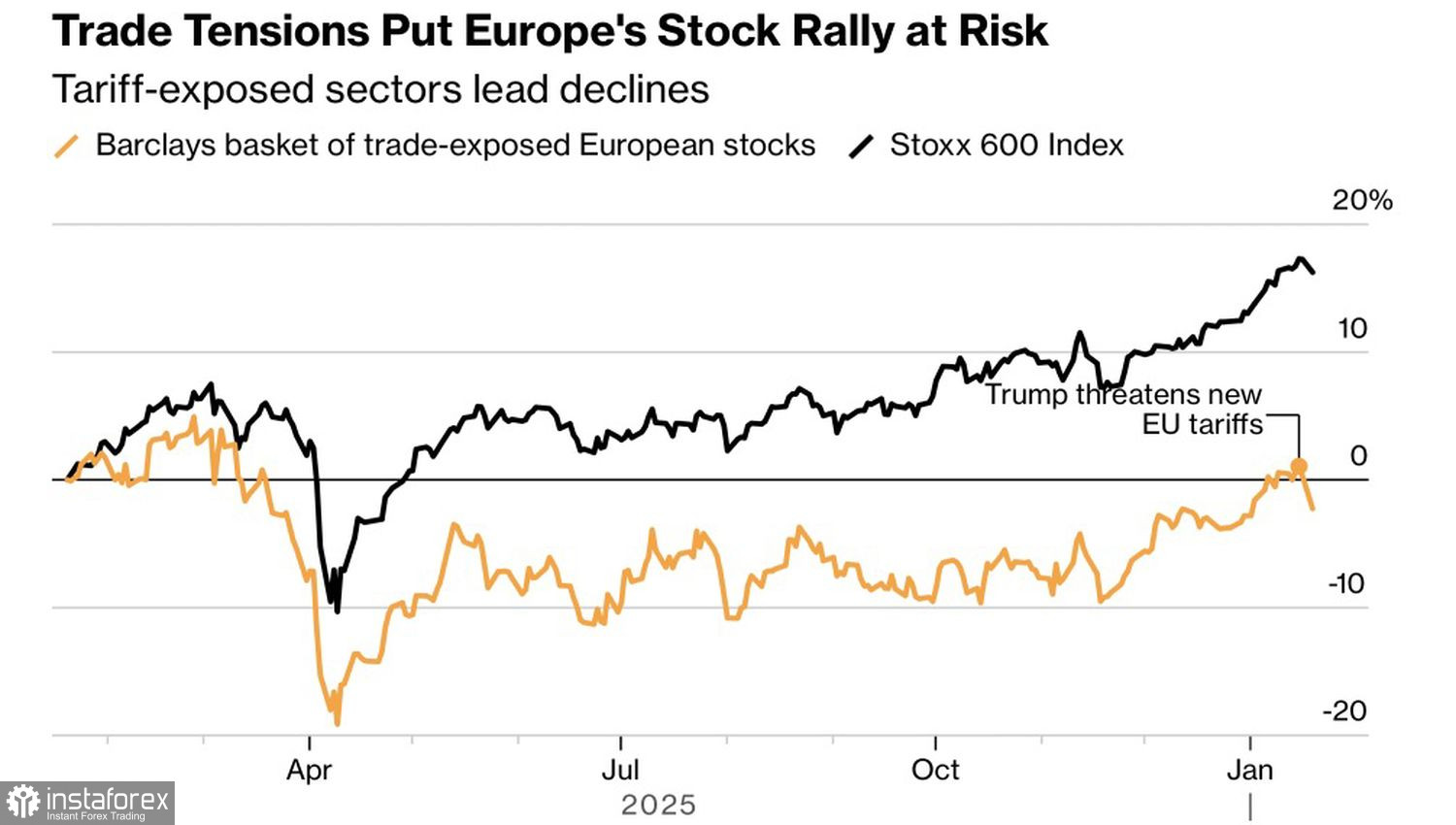
Favorable corporate earnings prospects, positive effects from easing ECB and Fed policies, and accelerating global growth give investors reason to buy dips in European equities.
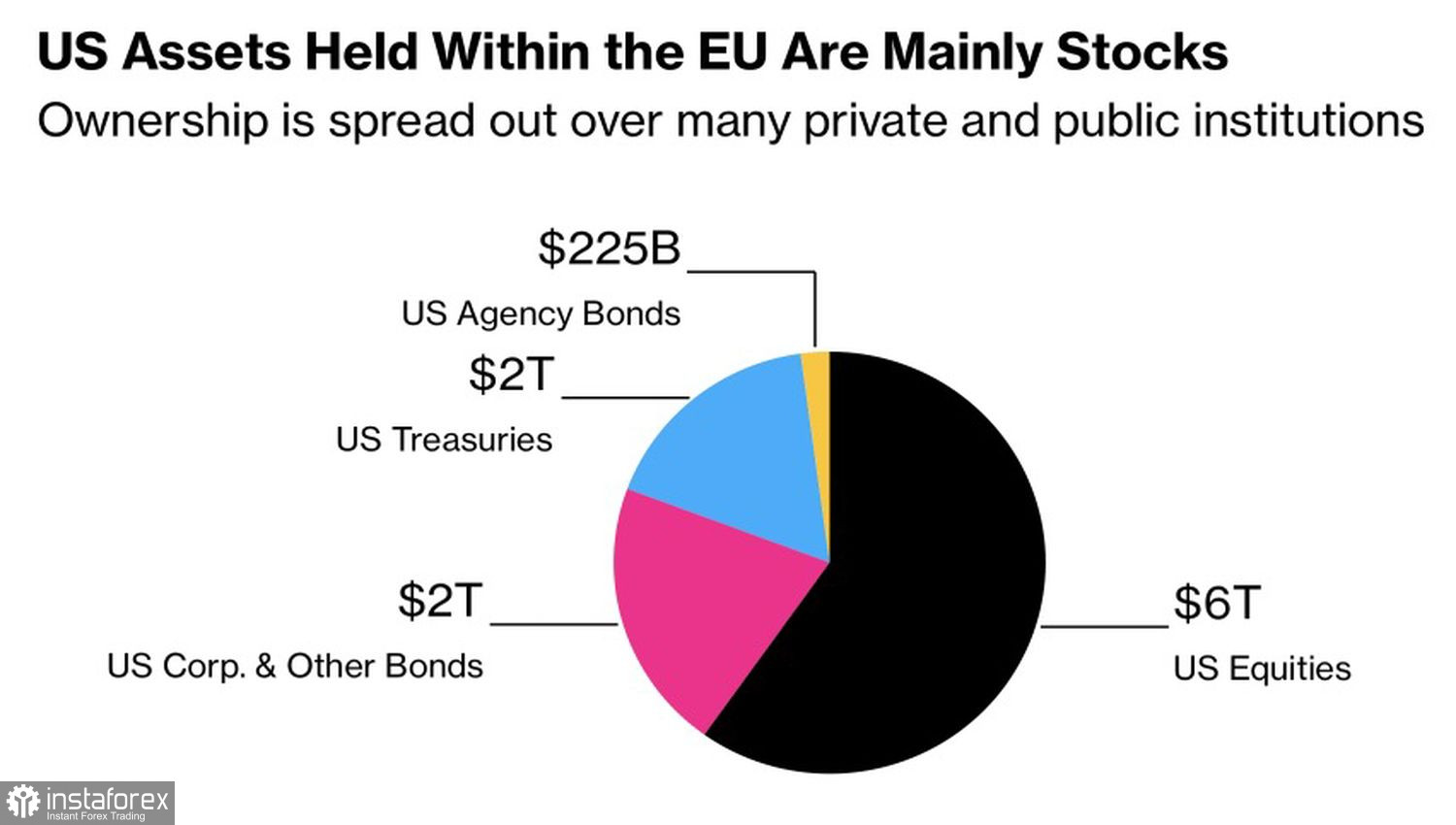
Citi disagrees. For the first time in over a year, the bank has downgraded European equities' weight, arguing that the latest escalation of trade tensions by the White House worsens the outlook for solid corporate profits. At the same time, Citi raised its stance on Japanese stocks from neutral to overweight.
In my view, after the large?scale tariffs in April and the mass trade deals struck in early summer, markets grew overly complacent. Trade?war risks seemed minimized, which allowed the S&P 500 to rise. Trump's January stunt made clear that tariffs can be used for various purposes — including geopolitical ones. If so, fear will inevitably replace greed.
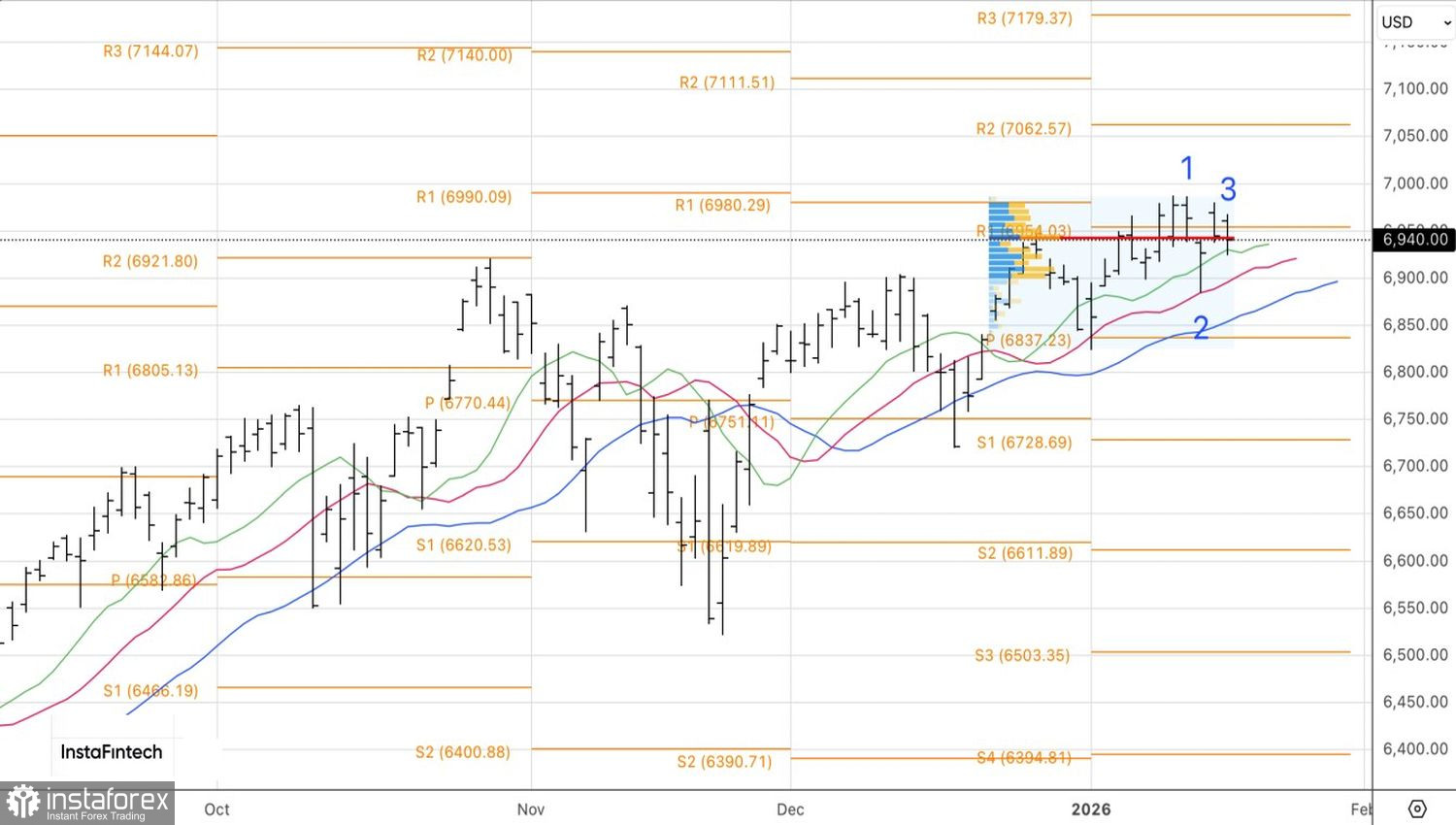
Technically, the daily S&P 500 chart shows a high probability of a price gap down at the open. The only question is whether the broad index will want to close that gap. If bulls fail to push prices back above the important pivot level of 6,900, it will signal weakness and provide grounds for building short positions.
You have already liked this post today
*The market analysis posted here is meant to increase your awareness, but not to give instructions to make a trade.


