
See also


 04.05.2026 06:02 AM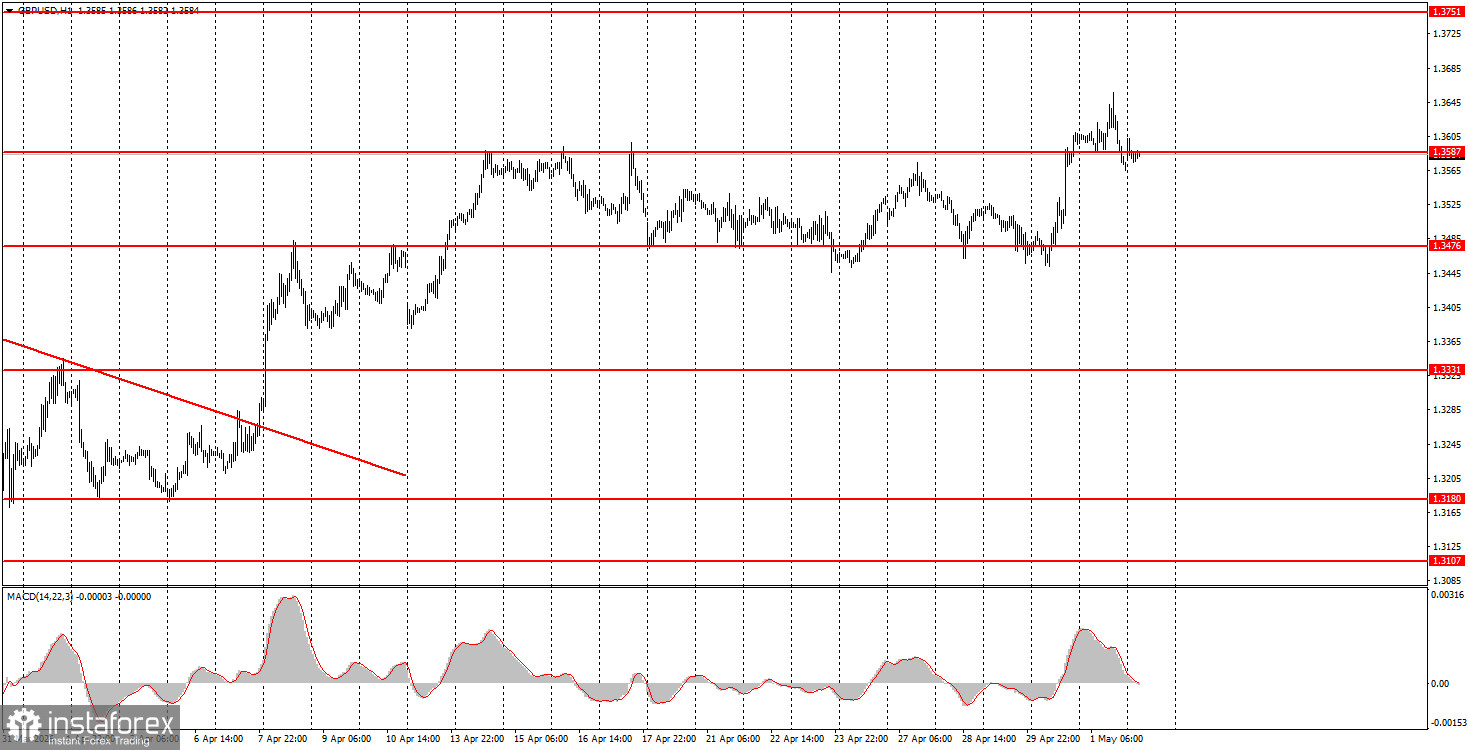
The GBP/USD pair managed to break out of the sideways channel on Friday, as shown in the illustration above. It doesn't matter that the price immediately returned to the channel due to geopolitical news. The key point is that the upper line of the channel was breached, and there is no reason for the US dollar to rise. As we mentioned, geopolitics may now occasionally provide support for the American currency. However, a sustainable trend for the dollar is unlikely to be expected. If the war in the Middle East resumes, this could trigger a new flight to safety from capital. But let's hope Washington and Tehran reach an agreement eventually.
On Friday, there were no significant events in the UK, while in the US, the ISM Manufacturing Index was published. The index showed weaker results than forecasts for April, but in the latter part of the day, the US dollar rose rather than fell. Thus, traders once again ignored the macroeconomic backdrop.
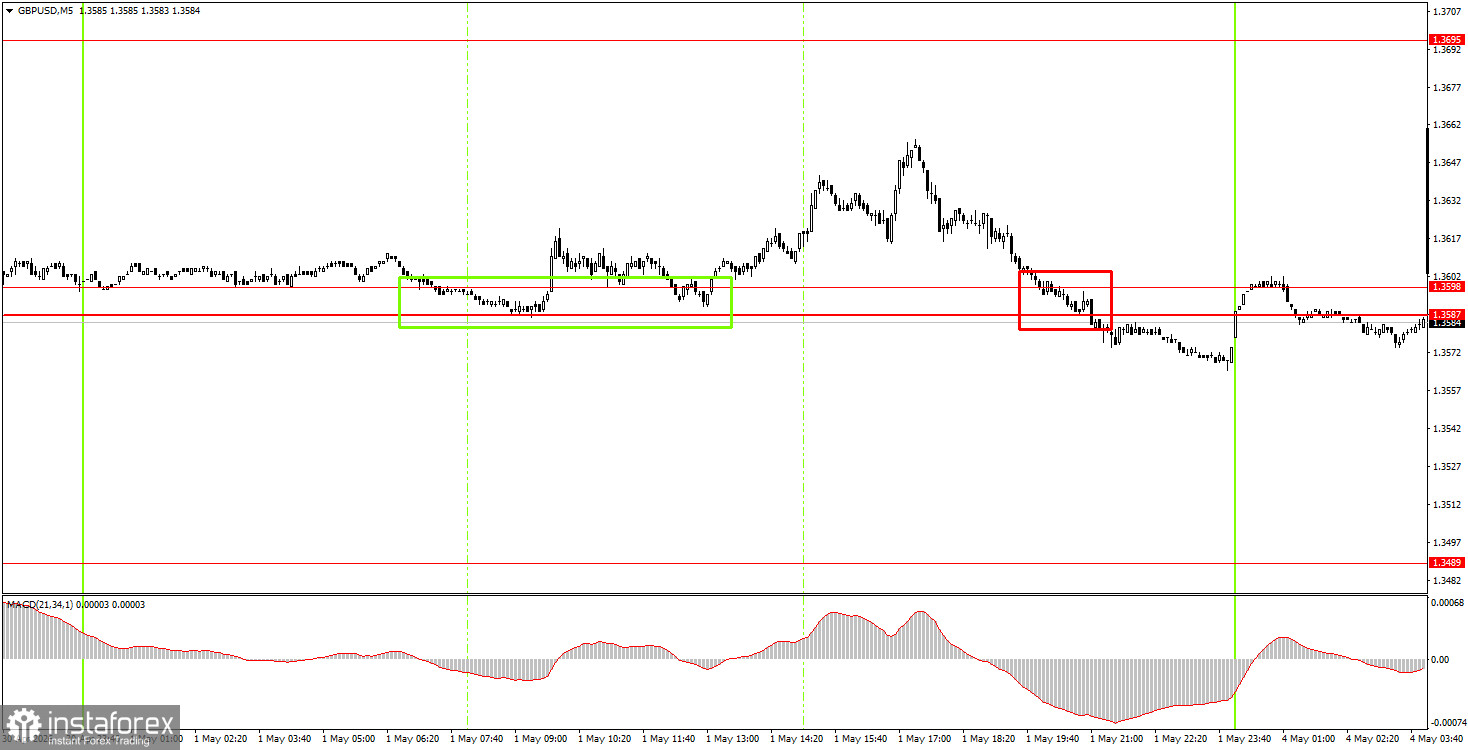
On the 5-minute timeframe, two trading signals were formed on Friday. During the European trading session, the price bounced off the 1.3587-1.3598 area twice, allowing long positions to be opened. However, immediately after news of another diplomatic failure between Iran and the US was received, it was advisable to close those long positions. A sell signal formed an hour before the market closed, but it probably wasn't worth acting on.
On the hourly timeframe, the GBP/USD pair continues to form an upward trend but has spent the last two weeks in a flat. There are still no global reasons for medium-term dollar growth, so we expect the resumption of the upward trend from 2025 in 2026. Without a serious escalation in the Middle East, the dollar will no longer be able to sustain the growth it saw in February and March. Individual events may still provoke their strengthening, but, in general, the geopolitical factor has taken a back seat.
On Monday, beginner traders may open short positions if the price bounces from the 1.3587-1.3598 area, targeting 1.3476-1.3489. A consolidation above the 1.3587-1.3598 area will allow new long positions to be opened, targeting 1.3695.
On the 5-minute timeframe, traders can currently operate at the following levels: 1.3175-1.3180, 1.3259-1.3267, 1.3319-1.3331, 1.3380-1.3386, 1.3476-1.3489, 1.3587-1.3598, 1.3695, 1.3741-1.3751. Today, both the UK and the US have completely empty event calendars, so traders can only expect technical movements and geopolitical news throughout the day.
Price levels (areas) of support and resistance – levels that are targets when opening purchases or sales, or sources of signals.
Red lines – channels or trend lines that display the current trend and indicate which direction is preferable to trade now.
MACD indicator (14, 22, 3) – histogram and signal line – a supporting indicator that can also be used as a source of signals.
Important speeches and reports (contained in the news calendar) can significantly influence the movement of the currency pair. Therefore, during their release, trading should be done as cautiously as possible, or one should exit the market to avoid a sharp price reversal against the preceding movement.
Beginners trading in the Forex market should remember that not every trade can be profitable. Developing a clear strategy and sound money management are key to long-term trading success.


